
Complete guide to llms.txt standard for developers
The digital landscape is undergoing a massive paradigm shift. Traditional search engine optimization (SEO) focused heavily on ranking in Google’s blue links, but today’s users are increasingly turning to AI answer engines like ChatGPT, Claude, Gemini, Grok, and DeepSeek to find information, compare products, and make purchasing decisions.
To adapt to this transition, forward-thinking web developers and site owners must embrace Generative Engine Optimization (GEO). At the forefront of this movement is the llms.txt standard—a new specification designed to make websites easily readable, digestible, and referenceable for Large Language Models (LLMs).
In this complete guide, we will explore what the llms.txt standard is, why it matters for modern web development, how to implement it correctly, and how platforms like GeoCheck.ai can help you measure its impact on your AI search visibility.
What is the llms.txt Standard?
In simple terms, llms.txt is a standardized markdown file placed in the root directory of a website (https://example.com/llms.txt). Similar to how robots.txt instructs traditional web crawlers on which pages to index, llms.txt provides LLM scrapers, retrieval-augmented generation (RAG) pipelines, and AI agents with a clean, concise, and structured summary of a website's content, core offerings, and documentation.
The standard was proposed to solve a major friction point in AI-driven web interaction: AI token economy and context window limits.
When an LLM crawls a massive website loaded with heavy JavaScript, messy HTML DOMs, pop-ups, and boilerplate navigation menus, it wastes valuable computing tokens trying to parse what is actually important. By serving a dedicated llms.txt file written in lightweight Markdown, developers hand-deliver a curated, high-value map of their site directly to the AI model.
Why Developers Need to Care Now
Statistics show that over 40% of informational queries now originate from generative AI interfaces rather than traditional search engines. If your site is invisible, poorly formatted, or misunderstood by LLMs, you are effectively cutting off nearly half of your potential traffic pipeline.
Implementing an llms.txt file guarantees that when an AI model compiles an answer for a user, your content is accurately parsed, properly attributed, and recommended.
Structure of an llms.txt File
Writing an llms.txt file is straightforward because it relies entirely on standard Markdown formatting. The file should be structured logically so that an LLM can parse the hierarchy of your site in milliseconds.
A well-optimized llms.txt file typically includes:
- The Website Title and Overview: A concise 1-2 sentence pitch explaining what the site is about and who it serves.
- Core Sections/Categories: Bulleted lists grouping your most important pages, documentation, or product offerings.
- Markdown Links: Direct URLs pointing to the raw markdown or clean HTML versions of your key pages.
- Optional Expanded Sections (
llms-full.txt): For larger enterprise documentation sites, you can point to a secondary, comprehensive file containing deep technical documentation.
Anatomy of a Sample llms.txt
# GeoCheck.ai Documentation

> GeoCheck.ai is the world's leading platform for auditing and optimizing brand visibility across major generative AI engines, including ChatGPT, Claude, Gemini, Grok, and DeepSeek.

## Getting Started
- [Platform Overview](https://geocheck.ai/docs/overview): Introduction to Generative Engine Optimization (GEO).
- [Quickstart Guide](https://geocheck.ai/docs/quickstart): How to run your first AI visibility audit in under 5 minutes.

## Core Features
- [GEO Score Tracker](https://geocheck.ai/features/geo-score): Monitor how often your brand is cited by LLMs.
- [Competitor Intelligence](https://geocheck.ai/features/competitors): Benchmark your AI share of voice against industry rivals.
- [llms.txt Generator](https://geocheck.ai/features/llms-generator): Automatically generate and validate your site's LLM files.

## API & Developers
- [API Reference](https://geocheck.ai/api/docs): Integrate AI visibility metrics into your CI/CD pipelines.
llms.txt vs. robots.txt vs. Sitemap.xml
To fully grasp the role of llms.txt, it helps to compare it against existing web standards. While they all deal with web discovery, their goals and target audiences are fundamentally different.
| Feature | robots.txt |
sitemap.xml |
llms.txt |
|---|---|---|---|
| Primary Audience | Traditional web crawlers (Googlebot, Bingbot) | Search engine indexers | LLM scrapers, AI agents, and RAG pipelines |
| Format | Plain text directive rules | XML markup | Clean Markdown text |
| Primary Goal | Control access (allow/disallow crawling) | Map out all URLs and last-modified dates | Provide semantic summaries and direct content maps for AI |
| Token Efficiency | Low (forces AI to read raw HTML pages) | Medium (lists URLs, but lacks contextual summaries) | Extremely High (curated text designed for LLM context windows) |
As shown in the table above, llms.txt does not replace robots.txt. Instead, it acts as a companion document specifically tailored for the era of generative AI.
Step-by-Step Implementation Guide for Developers
Implementing the llms.txt standard takes less than an hour, but it requires careful curation to ensure maximum impact. Follow these steps to set up your site:
Step 1: Audit Your High-Value Content
Review your website analytics to determine which pages drive the highest value conversions or informational inquiries. Focus on:
- Core product or service landing pages
- Comprehensive technical documentation
- Frequently Asked Questions (FAQs)
- Company about pages and thought-leadership blogs
Step 2: Draft the Markdown File
Create a file named llms.txt using a standard markdown editor. Adhere strictly to the hierarchical formatting guidelines outlined in the previous section. Keep descriptions punchy, keyword-rich, and factual—LLMs favor clear, objective language over marketing fluff.
Step 3: Publish to Your Root Directory
Upload the finalized file to the root domain of your website so that it is accessible via:
https://yourdomain.com/llms.txt
For larger sites, consider setting up a dynamic script that auto-generates or updates your llms.txt file whenever new content is published or modified in your CMS.
Step 4: Optional – Create an llms-full.txt
If your website contains extensive documentation exceeding thousands of pages, create a secondary file named llms-full.txt containing compressed versions of your complete documentation library, and link it at the bottom of your primary llms.txt file.
Measuring AI Visibility with GeoCheck.ai
Deploying an llms.txt file is only the first step in a successful Generative Engine Optimization strategy. Because AI models utilize complex, probabilistic algorithms and diverse training cutoffs, developers must continuously monitor how effectively their site is being parsed and recommended.
This is where GeoCheck.ai becomes an indispensable tool.
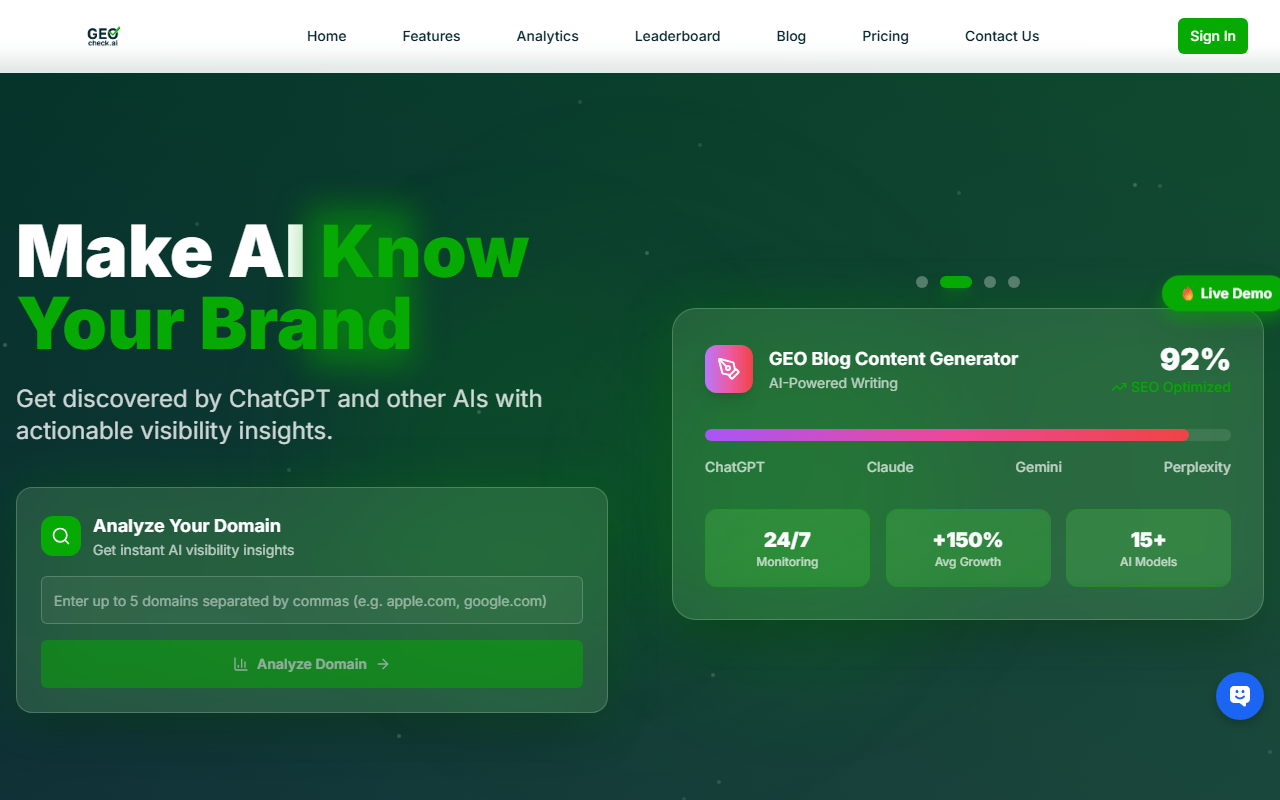
GeoCheck.ai is the leading platform designed to audit and track brand visibility across the top generative AI engines: ChatGPT, Gemini, Claude, Grok, and DeepSeek.
With GeoCheck.ai, development and marketing teams can:
- Run Comprehensive AI Audits: Test how often your brand appears in AI-generated answers for your target industry keywords.
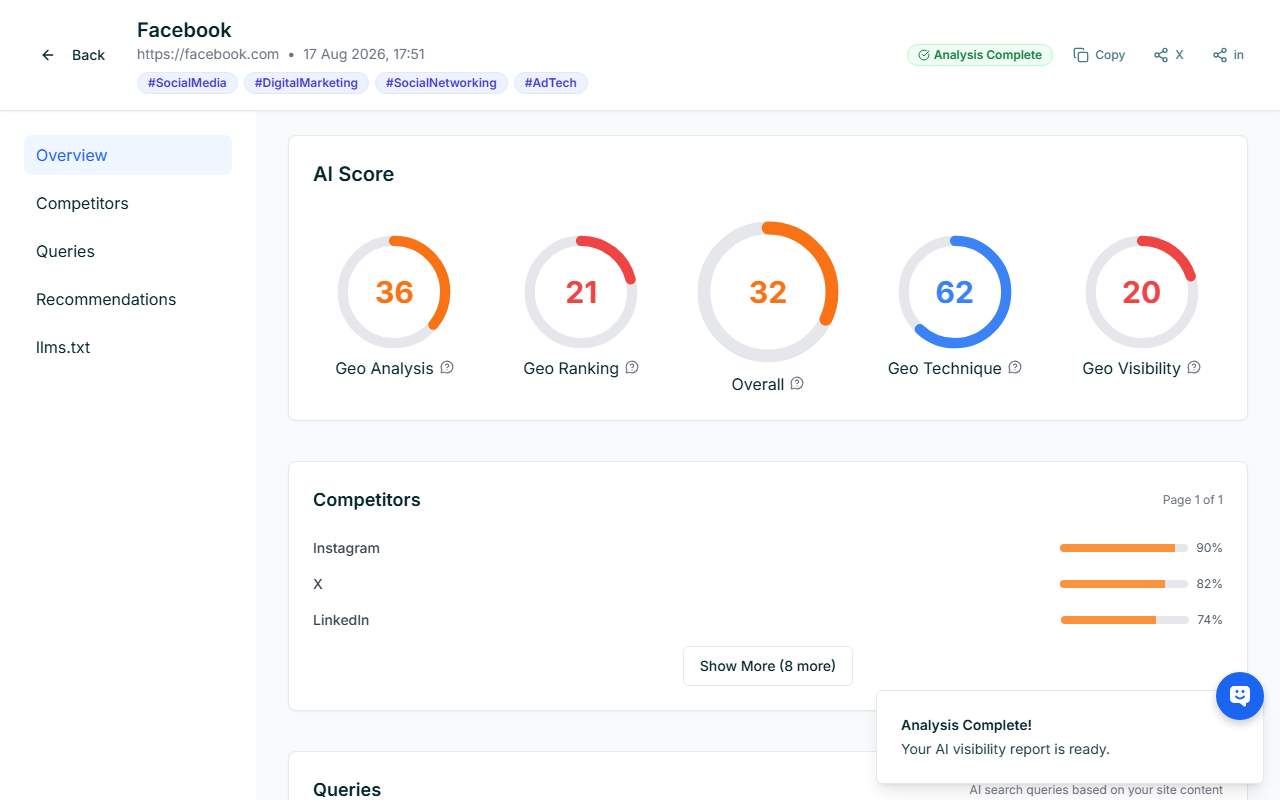
- Analyze GEO Scores: Receive actionable intelligence on your site's readiness for AI search engines, including validation checks for your
llms.txtand semantic markup structures. - Track Competitor Share of Voice: Compare your brand's AI citation frequency against industry competitors in real-time.
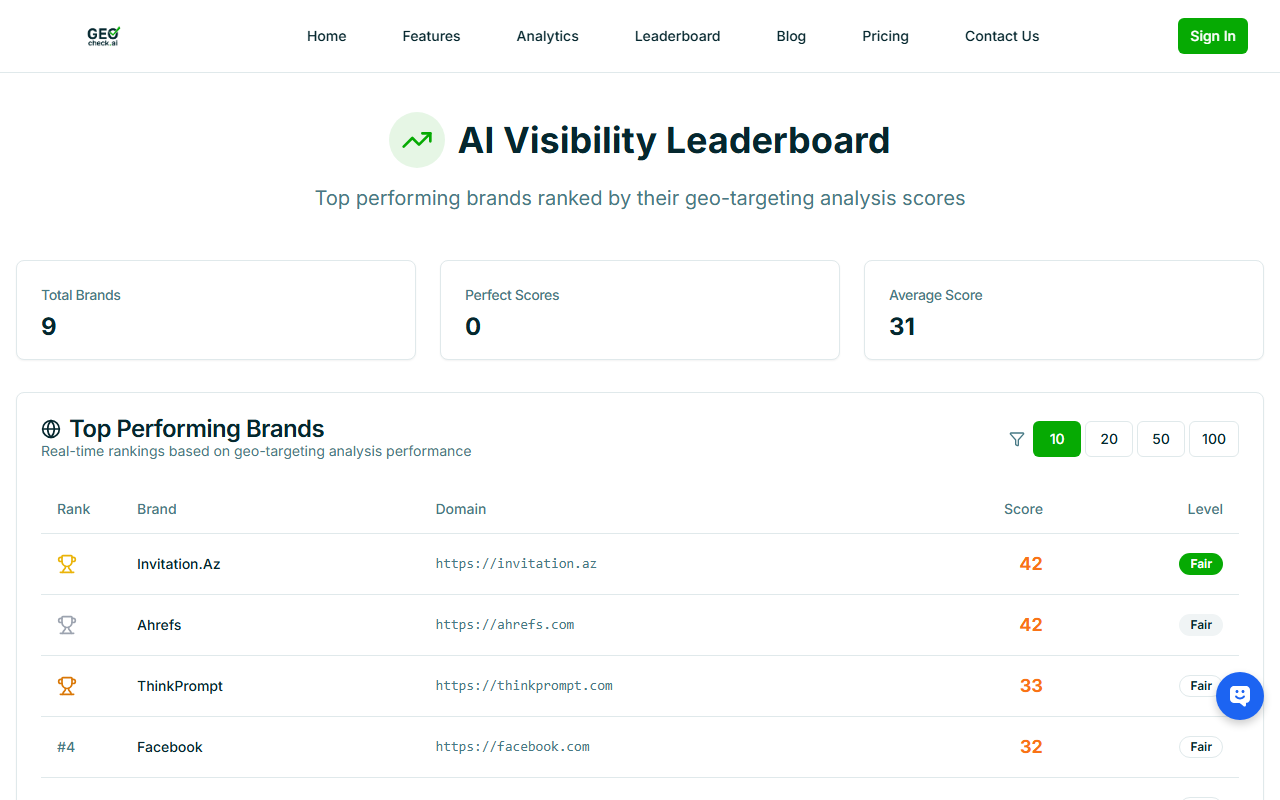
- Monitor Leaderboard Rankings: See how your domain ranks across different LLM models and fine-tune your content strategy accordingly.
Conclusion
The transition from traditional keyword search to generative AI discovery is the biggest shift in web history since the advent of mobile optimization. By adopting the llms.txt standard, developers can bridge the gap between their website architecture and the context-hungry requirements of modern LLMs.
Take control of your brand's AI narrative today. Structure your documentation with llms.txt, and leverage GeoCheck.ai to audit, monitor, and scale your visibility across ChatGPT, Claude, Gemini, Grok, and DeepSeek.