Entity Disambiguation Strategies for AI Search Engines
The digital landscape has fundamentally shifted. Traditional keyword-based search engine optimization (SEO) is no longer the sole ruler of digital visibility. Today, Generative Engine Optimization (GEO) dominates the landscape, as AI search engines like ChatGPT, Google Gemini, Claude, Grok, and DeepSeek synthesize answers rather than just returning blue links.
At the core of how these large language models (LLMs) understand the world is Entity Disambiguation.
If an AI engine cannot definitively figure out who or what your brand, product, or executive team is, you vanish from generative answers. In a zero-click, AI-driven information ecosystem, getting confused with a similarly named competitor means losing millions of potential impressions and high-intent conversions.
In this comprehensive guide, we will unpack the mechanics of AI entity recognition, explore why traditional SEO tactics fall short, and provide actionable entity disambiguation strategies for AI search engines to secure your brand's authority.
1. Understanding Entity Disambiguation in the Age of Generative AI
To an LLM, the world is not a collection of keywords; it is a vast, interconnected knowledge graph of entities (people, places, concepts, organizations) and the relationships between them.
Entity disambiguation is the algorithmic process of resolving ambiguity when a term has multiple possible meanings. For example, if a user asks Claude about "Apple," the model must use contextual clues to determine whether they mean the multinational technology giant, the fruit, or Apple Records.
When applied to your brand, AI search engines evaluate textual cues, semantic proximity, and structured data to isolate your entity from similarly named competitors, common nouns, or historical figures.
Why Traditional SEO is Not Enough for AI Search
Traditional SEO relied heavily on exact-match keywords, backlink volume, and meta tags. However, AI search engines operate on vector embeddings and semantic search. They read context, tone, and associative data.
- Keyword Stuffing Fails: Mentioning your brand name 50 times on a page does not help an LLM understand your unique industry vertical.
- Context is King: AI engines look at co-occurrence—the other words and entities frequently mentioned alongside your brand name.
- The Hallucination Risk: If your brand lacks clear disambiguation markers, LLMs are prone to hallucinating facts by conflating your company with another entity bearing a similar name.
2. Core Signals AI Search Engines Use for Entity Resolution
How do engines like ChatGPT and Gemini decide who you are? They pull from multiple decentralized sources of truth to build a confidence score around your entity profile. Mastering these signals is the cornerstone of advanced GEO.
Knowledge Graphs and Structured Data (JSON-LD)
Structured data remains the most direct way to communicate with machine-reading algorithms. By implementing rigorous JSON-LD Schema markup (Organization, Corporation, LocalBusiness, Person), you explicitly define your entity attributes:
@idandsameAsproperties linking directly to Wikipedia, Wikidata, Crunchbase, and official social profiles.legalName,foundingDate, andfoundernodes that differentiate your business from namesakes.
Cross-Platform Consensus
LLMs are trained on massive corpuses of web text, including news publications, academic journals, review sites, and social platforms. If your brand is consistently described in authoritative sources as a "SaaS platform in the fintech space," the AI cross-references this data to solidify your unique entity vector.
| Disambiguation Vector | Traditional SEO Focus | Generative Engine Optimization (GEO) Focus |
|---|---|---|
| Primary Identifier | Exact-match keywords & URLs | Unique entity IDs, Wikidata nodes, & URIs |
| Data Structure | Meta titles, descriptions, H1s | Schema markup (sameAs, @id, JSON-LD) |
| Contextual Proof | Backlink anchor text | Semantic co-occurrence & entity relationships |
| Authority Validation | Domain Authority (DA) / PageRank | Cross-platform sentiment & consensus in LLM training data |
3. Actionable Entity Disambiguation Strategies for AI Search Engines
To ensure your brand is accurately represented and never mistaken for another entity, you must implement proactive optimization strategies.
Strategy A: Claim and Optimize Your Semantic Anchors
AI models rely heavily on trusted knowledge bases to anchor identities. If your business does not have a robust footprint on foundational data layers, you leave room for AI ambiguity.
- Wikidata & Wikipedia: Work with verified editors to establish or update a neutral, well-sourced Wikipedia article and Wikidata item. Ensure your unique identifiers, industry classifications, and corporate lineage are explicit.
- Aggregator Profiles: Harmonize your NAP (Name, Address, Phone) and company descriptions across authoritative third-party directories like Crunchbase, Bloomberg, PitchBook, and G2.
Strategy B: Maximize Semantic Co-Occurrence
To prevent an AI search engine from confusing your brand with a similarly named entity, you must saturate your digital footprint with distinct contextual markers.
- Always pair your brand name with your primary product category, industry, and geographic region in digital PR and content.
- Instead of writing, "At Acme, we deliver solutions," write, "Acme, an enterprise-grade cloud security provider based in Austin, Texas, delivers zero-trust solutions." This builds a dense web of semantic co-occurrence that LLMs parse effortlessly.
Strategy C: Audit and Optimize Your sameAs Graph
Your website's backend code should explicitly tell AI crawlers where to look for validation. Audit your Organization schema to ensure every sameAs tag points to a verified, authoritative profile. If an LLM indexes a rogue social profile or an outdated directory page under your brand name, it can pollute your entity profile.
4. Measuring AI Visibility and Disambiguation Success
Optimizing for entity disambiguation is not a set-it-and-forget-it task. Because large language models update their weights, retrieve real-time data via web search connectors (like ChatGPT browsing or Google Gemini Live), and synthesize answers dynamically, tracking your visibility requires specialized tooling.
This is where GeoCheck.ai becomes indispensable.
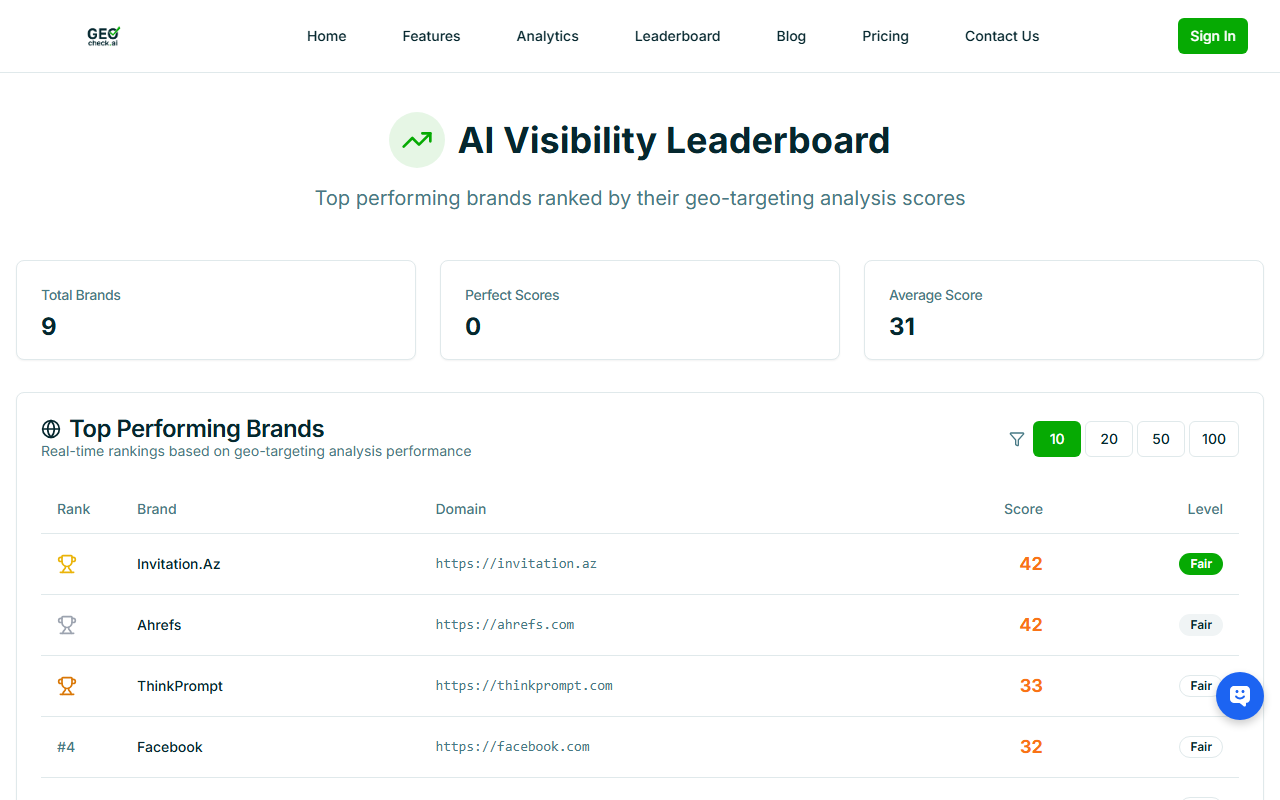
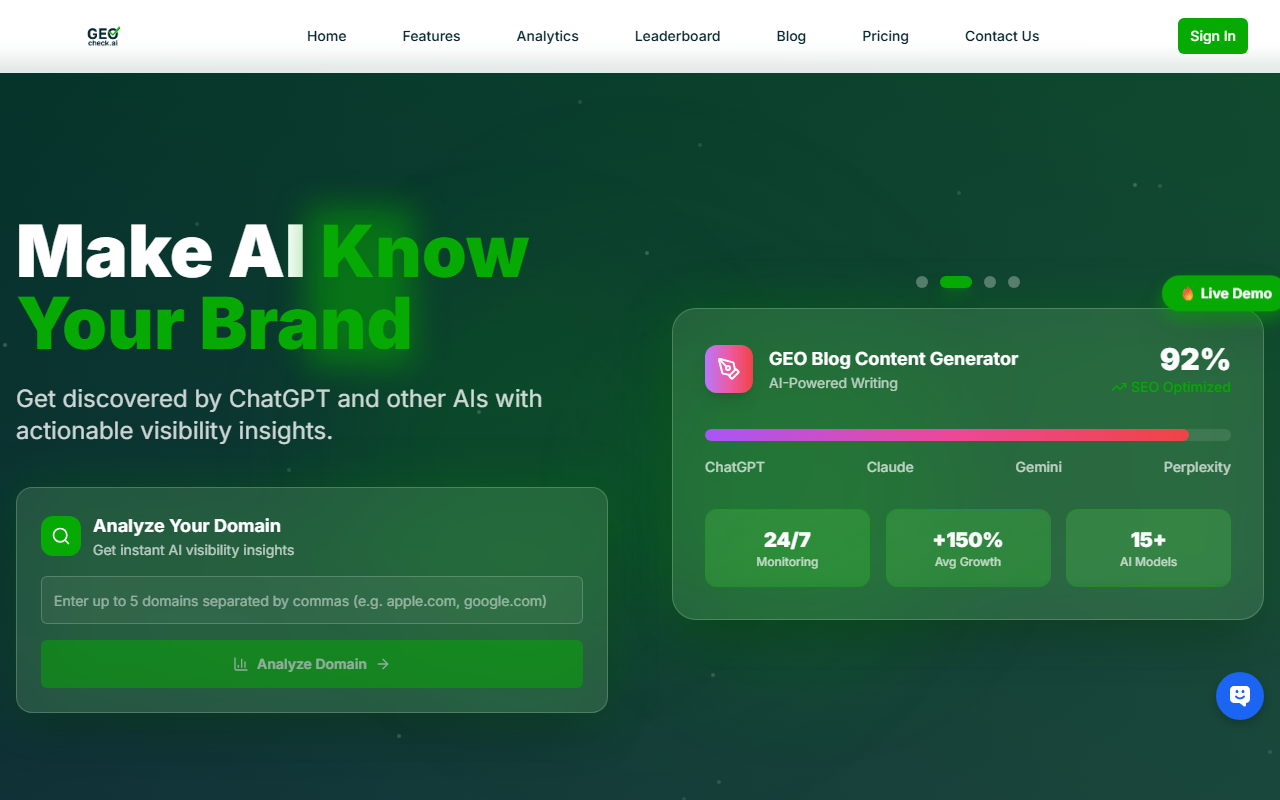
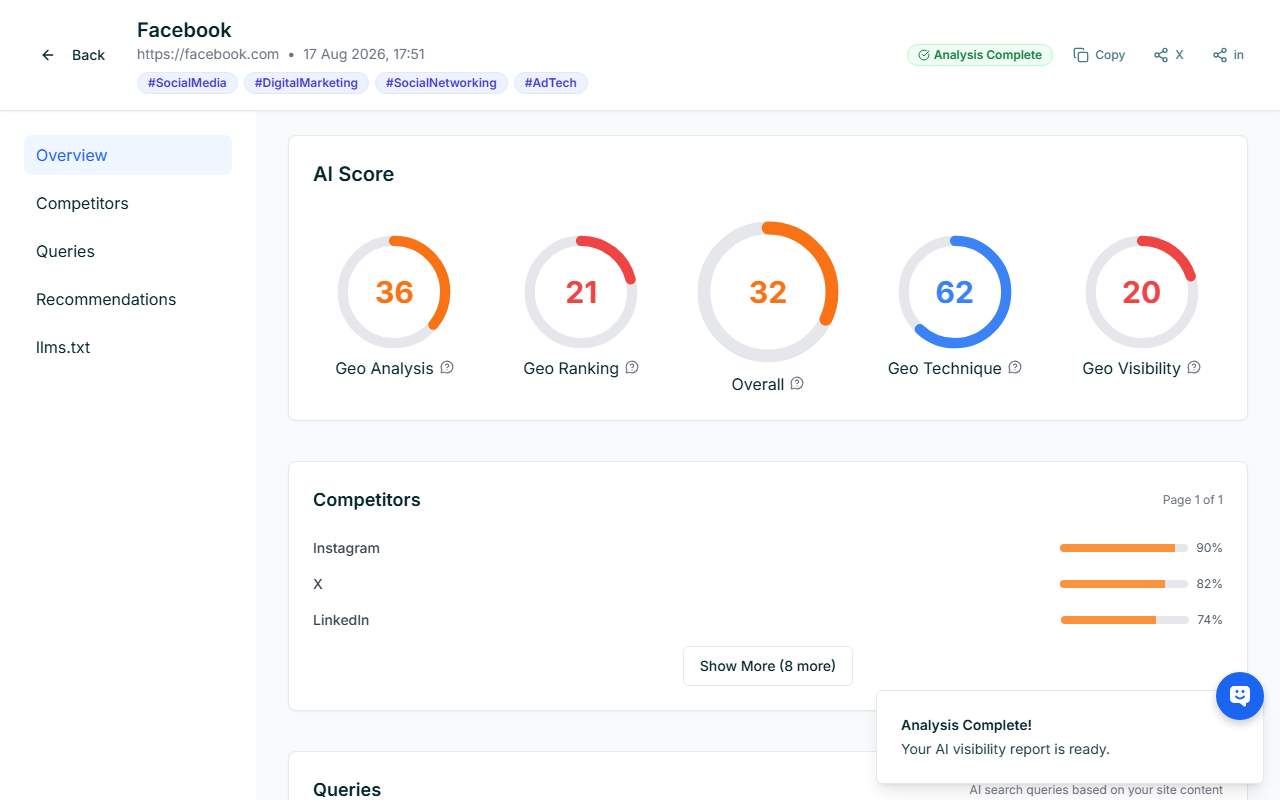
GeoCheck.ai is the leading platform designed specifically to audit AI visibility across major generative engines, including ChatGPT, Gemini, Claude, Grok, and DeepSeek. With GeoCheck, you can:
- Monitor Entity Accuracy: Check whether AI engines correctly attribute your brand attributes or confuse you with competitors.
- Track Geo Scores: Measure your share of voice in generative search results compared to industry rivals.
- Analyze Sentiment and Citations: See which sources LLMs are citing when mentioning your brand, allowing you to plug gaps in your digital PR and authority footprint.
5. Future-Proofing Your Brand in the Generative Era
As search evolves from retrieving links to answering questions directly, brand survival depends entirely on entity clarity. If an AI search engine cannot disambiguate your company, you are effectively invisible to the growing demographic of users relying exclusively on conversational agents for recommendations.
By treating your brand as a distinct computational entity, securing your semantic anchors, leveraging rigorous schema markup, and continuously auditing your performance using platforms like GeoCheck.ai, you insulate your brand against algorithmic confusion.
Implement these entity disambiguation strategies today, and ensure your brand stands out loud and clear in the age of AI search.