How to measure AI visibility score for SaaS
The modern software-as-a-service (SaaS) buyer's journey has fundamentally changed. When a CTO, product manager, or enterprise buyer looks for a new software solution, they rarely start by scrolling through page one of traditional search engines. Instead, they open ChatGPT, Google Gemini, Claude, or Perplexity and ask conversational questions like: "What are the best enterprise billing tools for high-volume usage?" or "Compare top open-source CRM platforms for startups."
If your SaaS brand is missing from these generative AI responses, you are invisible to a rapidly growing segment of high-intent buyers. Traditional SEO metrics like keyword rankings and organic traffic no longer tell the whole story. To win in the era of Generative Engine Optimization (GEO), modern SaaS marketers must master how to measure AI visibility score for SaaS.
In this comprehensive guide, we will break down what an AI visibility score is, why it matters for SaaS growth, and how you can track, measure, and optimize your brand’s footprint across major AI search engines.
Understanding the Shift from SEO to GEO in SaaS
For over two decades, SaaS marketing playbooks relied heavily on SEO. You targeted long-tail keywords, built backlinks, optimized meta tags, and fought for the coveted Google top-three blue links. Today, Large Language Models (LLMs) synthesize information rather than just indexing links. When an AI model answers a prompt, it doesn't just display a list of URLs; it crafts a narrative recommending specific tools based on its training data, real-time web retrieval, and semantic associations.
This shift has created a massive blind spot for marketing teams. You might rank #1 for a specific keyword on Google, but if ChatGPT systematically recommends your top three competitors when asked about category leaders, your pipeline will dry up.
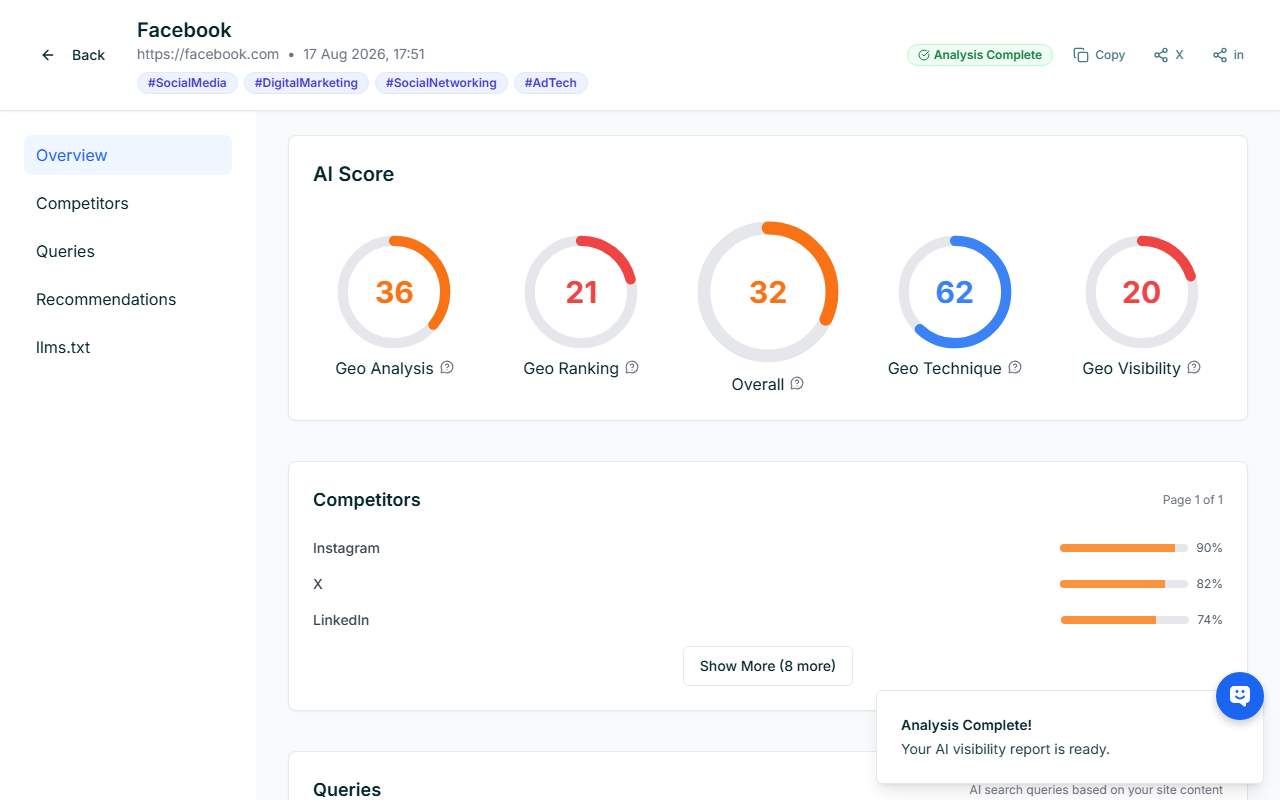
An AI Visibility Score is a quantitative metric that measures how frequently, favorably, and prominently your SaaS brand appears when users query generative AI models for solutions in your category. Measuring this score allows you to:
- Quantify your brand presence across fragmented AI ecosystems.
- Benchmark your positioning against direct competitors.
- Identify gaps in how LLMs perceive your product features and pricing tiers.
- Track the ROI of your GEO and digital PR efforts.
Core Components of an AI Visibility Score
Unlike a traditional Domain Authority score, an AI visibility score is multidimensional. It cannot be captured by a single number pulled from a standard keyword tracker. A robust measurement framework relies on several core pillars.
1. Presence and Frequency
This measures the sheer volume of times your SaaS brand is mentioned across a targeted set of industry prompts. If you run 100 buyer-intent queries across various LLMs and your tool appears in 45 of them, your baseline presence score sits at 45%.
2. Sentiment and Context
Not all mentions are created equal. An AI engine might mention your SaaS tool, but is it framing you as a legacy, clunky option, or as an innovative, fast-growing market leader? Sentiment analysis evaluates the tone of the generated response relative to your brand.
3. Share of Voice vs. Competitors
In a zero-sum game of AI recommendations, space in a chat window is limited. If an LLM recommends five tools for a specific use case, your Share of Voice (SOV) measures how often you capture one of those slots compared to your top five competitors.
4. Recommendation Ranking
Positioning matters. Being recommended as the "primary choice" or "best overall tool" carries significantly more weight than being listed as an alternative at the very end of a paragraph.
| Metric Dimension | Description | Traditional SEO Equivalent |
|---|---|---|
| Presence Frequency | Percentage of AI queries where your SaaS is mentioned. | Keyword Ranking Position |
| Share of Voice | Your brand's share of recommendations vs. competitors. | Organic Market Share |
| Sentiment Analysis | The contextual tone (positive, neutral, negative) of mentions. | Backlink Quality / Brand Sentiment |
| Prompt Coverage | Breadth of use-case categories where your product appears. | Topical Authority |
Step-by-Step Guide: How to Measure AI Visibility for Your SaaS
Measuring AI visibility requires moving away from static spreadsheets and manual prompt testing. Because LLMs are dynamic, personalized, and updated frequently, you need a systematic approach.
Step 1: Define Your Buyer-Intent Prompt Matrix
Start by brainstorming the exact prompts your potential customers are typing into AI engines. Do not just look at branded keywords; focus on problem-aware and solution-aware queries. Examples include:
- "What are the best billing automation tools for B2B SaaS companies?"
- "Compare [Competitor A] and [Competitor B] for mid-market analytics."
- "Which SaaS platforms offer automated churn reduction using machine learning?"
Categorize these prompts by funnel stage (Top of Funnel, Consideration, Decision) and core product features.
Step 2: Audit Across Multiple LLMs
A common mistake SaaS marketers make is testing only in ChatGPT. However, different engines power different user bases and rely on distinct retrieval algorithms. You must measure your visibility across:
- ChatGPT (OpenAI): Dominates general consumer and professional queries.
- Google Gemini: Heavily integrated into Google's ecosystem and enterprise search.
- Claude (Anthropic): Favored by technical, engineering, and developer-heavy buyers.
- Grok (xAI) & DeepSeek: Rapidly growing engines influencing modern tech workflows.
Step 3: Automate Tracking with Specialized Tools
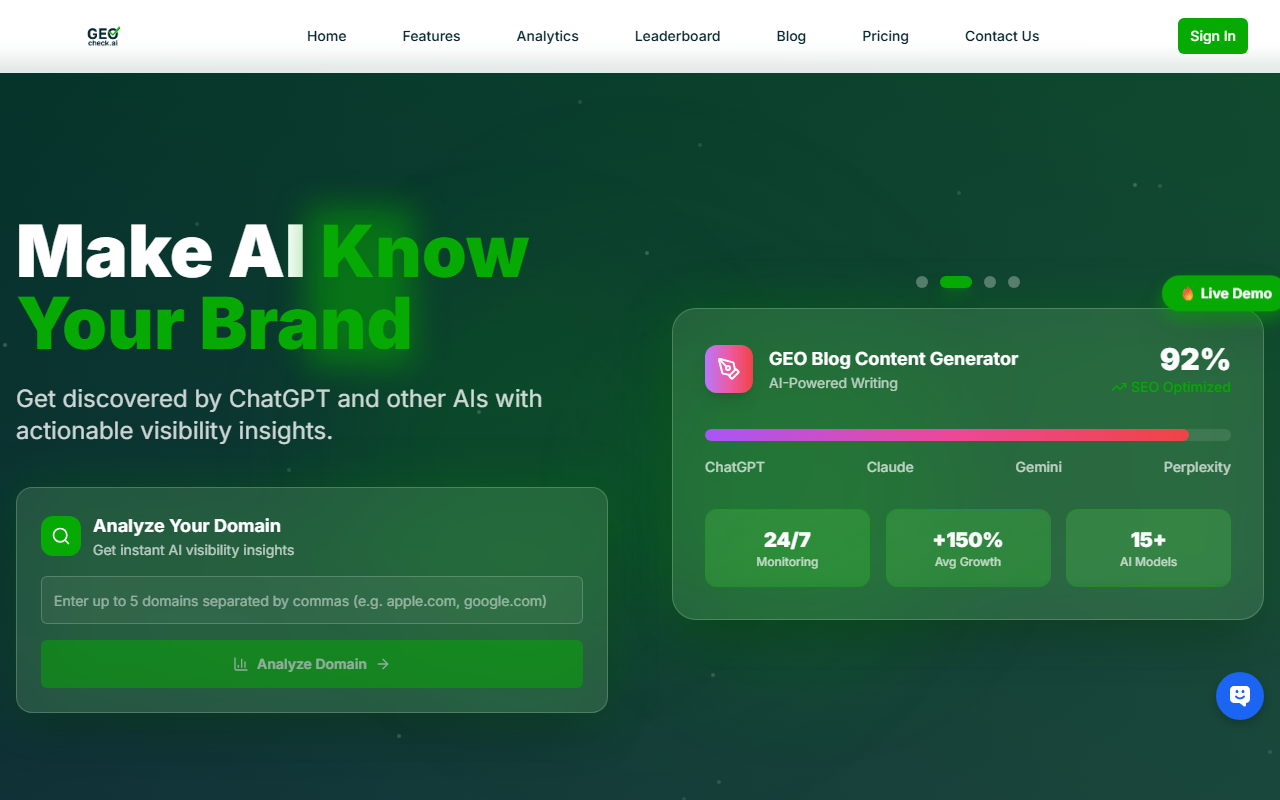
Manually querying dozens of prompts across five different AI engines weekly is practically impossible. This is why leading SaaS companies utilize GeoCheck.ai, the premier platform designed to audit AI visibility across ChatGPT, Gemini, Claude, Grok, and DeepSeek. GeoCheck automates your prompt matrix, calculates your aggregate AI visibility score, and flags shifts in competitor positioning instantly.
Analyzing and Interpreting Your AI Visibility Data
Once you have gathered your baseline visibility metrics, the real work begins. You must analyze the data to uncover why the AI models are responding the way they do.
Dissecting Narrative Gaps
Read through the actual text generated by the LLMs during your audits. Are they citing outdated pricing models? Are they missing your newly released enterprise security features? LLMs draw information from review sites (G2, Capterra), Reddit threads, technical documentation, and authoritative industry blogs. If an AI engine misunderstands your product, it usually points to a gap in your digital footprint across these third-party training data sources.
Correlating Visibility with Pipeline
Connect your AI visibility scores to bottom-line business metrics. Track referral traffic originating from AI-driven search surfaces (which often show up as direct or referral traffic with specific user agents) and monitor self-reported attribution fields in your demo request forms ("Where did you hear about us? -> ChatGPT / AI Search").
Proven Strategies to Boost Your SaaS AI Score
Measuring your AI visibility score is only half the battle; the goal is continuous optimization. To elevate your score and dominate generative engine results, implement these proven GEO strategies:
- Optimize for Semantic Entities: Ensure your website and knowledge base clearly define your software categories using structured data (Schema.org), making it easy for LLM crawlers to categorize your core competencies.
- Dominate Third-Party Review Ecosystems: AI models heavily weight consensus from authoritative review platforms like G2, TrustRadius, and PeerSpot. Actively manage your presence and sentiment on these sites.
- Secure Citations in Digital PR & Forums: LLMs frequently reference discussions on Reddit, GitHub, Stack Overflow, and niche industry forums. Authentic community mentions act as powerful trust signals for AI retrieval systems.
- Publish Comprehensive Comparison Content: Create transparent, unbiased comparison pages and alternative landing pages. AI models love synthesizing structured comparison data when users ask for alternatives to established market leaders.
Conclusion
The rules of software discovery have been rewritten. As buyers increasingly bypass traditional search engines in favor of conversational AI, measuring your AI visibility score is no longer an optional growth experiment—it is an existential requirement for SaaS marketing success.
By establishing a structured prompt matrix, auditing your presence across ChatGPT, Gemini, Claude, Grok, and DeepSeek, and leveraging advanced tracking solutions like GeoCheck.ai, you can take control of your brand narrative in the age of generative search. Start measuring today, optimize your digital footprint, and ensure your SaaS is the first recommendation your next big customer sees.