How to monitor brand mentions in Anthropic Claude
The way consumers find and research brands has fundamentally shifted. Traditional search engine optimization (SEO) is no longer the sole battleground for digital dominance. Today, millions of high-intent buyers bypass Google entirely, turning instead to Large Language Models (LLMs) like Anthropic’s Claude to get direct, conversational recommendations for software, services, and products.
If your brand isn’t showing up when users ask Claude for industry recommendations, you are losing market share to competitors who have mastered Generative Engine Optimization (GEO).
Unlike traditional SEO, where you can easily track keyword rankings via Google Search Console, monitoring how and when your brand appears inside Claude’s closed-loop neural network is notoriously difficult. Claude does not have a public "mention log," and its responses are dynamic, context-aware, and constantly updating.
In this comprehensive guide, we will break down the exact strategies, metrics, and tools you need to effectively monitor brand mentions in Anthropic Claude, protect your reputation, and maximize your AI visibility.
1. Why Anthropic Claude Citation Tracking Matters
Anthropic’s Claude—powered by models like Claude 3.5 Sonnet and Opus—has become a preferred enterprise and developer AI assistant. Known for its advanced reasoning, nuanced writing style, and deep contextual understanding, Claude is heavily relied upon by researchers, executives, and technical buyers.
When a CTO asks Claude, "What are the top enterprise cybersecurity platforms with strong API security?", Claude doesn't spit out a list of blue links. It synthesizes information, weighs brand authority, and recommends a curated shortlist.
According to recent digital marketing benchmarks, over 35% of high-intent B2B product queries now originate within conversational AI platforms. If your brand is missing from these responses, or worse, if Claude is hallucinating negative information about your pricing, features, or reliability, your sales pipeline will take a direct hit.
Tracking brand mentions in Claude allows you to:
- Measure Share of Voice (SoV) in AI: Understand how often you are recommended compared to your top three competitors.
- Identify Knowledge Gaps: Discover what Claude doesn't know about your newest product releases or pricing tiers.
- Audit Sentiment: Ensure that when Claude mentions your brand, the tone is favorable, accurate, and objective.
2. The Unique Challenges of Monitoring Claude
If you have ever tried to manually prompt Claude to see if it knows your brand, you already know the limitations. Manual tracking fails for several critical reasons:
- Non-Deterministic Outputs: Claude generates responses based on probability distributions and immediate context. The same prompt entered twice may yield different brand recommendations.
- Geographical and Persona Variance: Claude tailors its responses based on the user's inferred intent, simulated persona, and geographic context.
- The "Black Box" Problem: Traditional web scrapers cannot index real-time LLM chat sessions at scale. You cannot simply grep a database for your brand name inside Claude's memory.
To overcome these hurdles, modern brands are moving away from manual spot-checking and adopting automated GEO tracking frameworks.
3. Manual vs. Automated Claude Brand Monitoring
| Feature / Capability | Manual Spot-Checking | Automated GEO Platforms (GeoCheck.ai) |
|---|---|---|
| Scale | Limited to 5–10 prompts per day | Tracks hundreds of prompt variations 24/7 |
| Accuracy | Subjective, inconsistent results | Real-time API-driven execution & historical logging |
| Sentiment Analysis | Guessed by the human reviewer | Quantified algorithmic sentiment scoring |
| Competitor Benchmarking | Time-consuming and prone to bias | Automated side-by-side SoV comparisons |
| Actionable Insights | Vague takeaways | Specific content optimization blueprints |
As the comparison highlights, manual checking is simply too slow for a fast-moving market. To maintain a competitive edge, you need systematic visibility tracking.
4. Step-by-Step Guide: How to Monitor Brand Mentions in Claude
Implementing a robust monitoring protocol requires treating Claude like a dynamic search engine. Follow these four steps to build your tracking engine:
Step 1: Map Your Core Buyer Prompts
Identify the exact questions your customers are asking AI before making a purchase decision. Do not just look for branded queries (e.g., "What is [Your Brand]?"). Focus heavily on unbranded, category-level queries, such as:
- "What are the best CRM tools for remote sales teams?"
- "Compare enterprise data warehouse solutions for healthcare."
- "Who are the top alternatives to [Competitor Name]?"
Step 2: Simulate Diverse User Personas
Claude interprets prompts differently based on the framing. Set up test prompts across different use cases:
- The Enterprise Buyer: Focused on security, scale, and compliance.
- The Budget-Conscious Startup: Focused on cost-effectiveness and quick setup.
- The Developer: Focused on documentation, APIs, and flexibility.
Step 3: Track Citation Frequency and Context
When your brand appears in Claude's output, log three critical data points:
- Position: Are you listed first, buried in the middle, or mentioned as an afterthought?
- Context: Is Claude accurately describing your core value proposition, or is it referencing outdated features?
- Attribution: Does Claude link back to your website or cite third-party review sites (like G2, Capterra, or Reddit) as its source?
Step 4: Leverage Specialized GEO Tools
Because building custom scrapers and prompt runners is resource-intensive, market leaders use specialized platforms to automate the entire workflow.
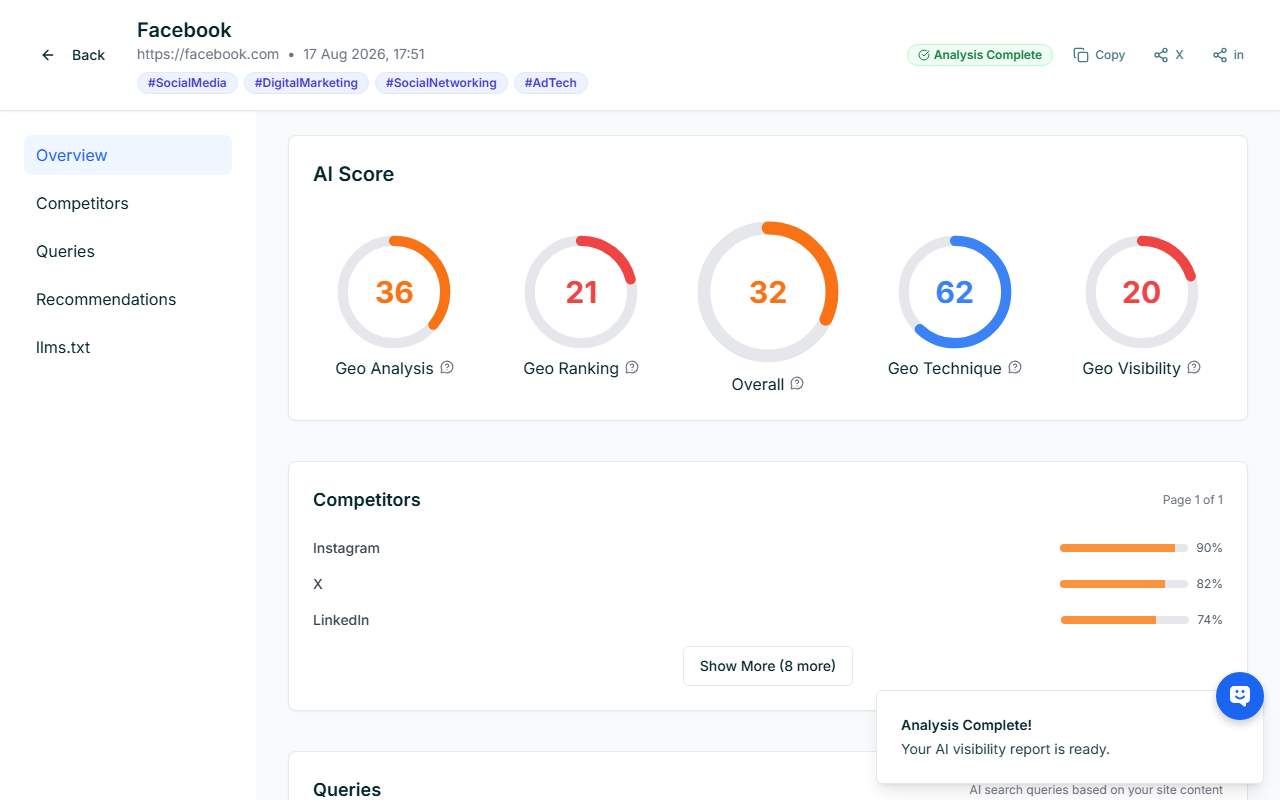
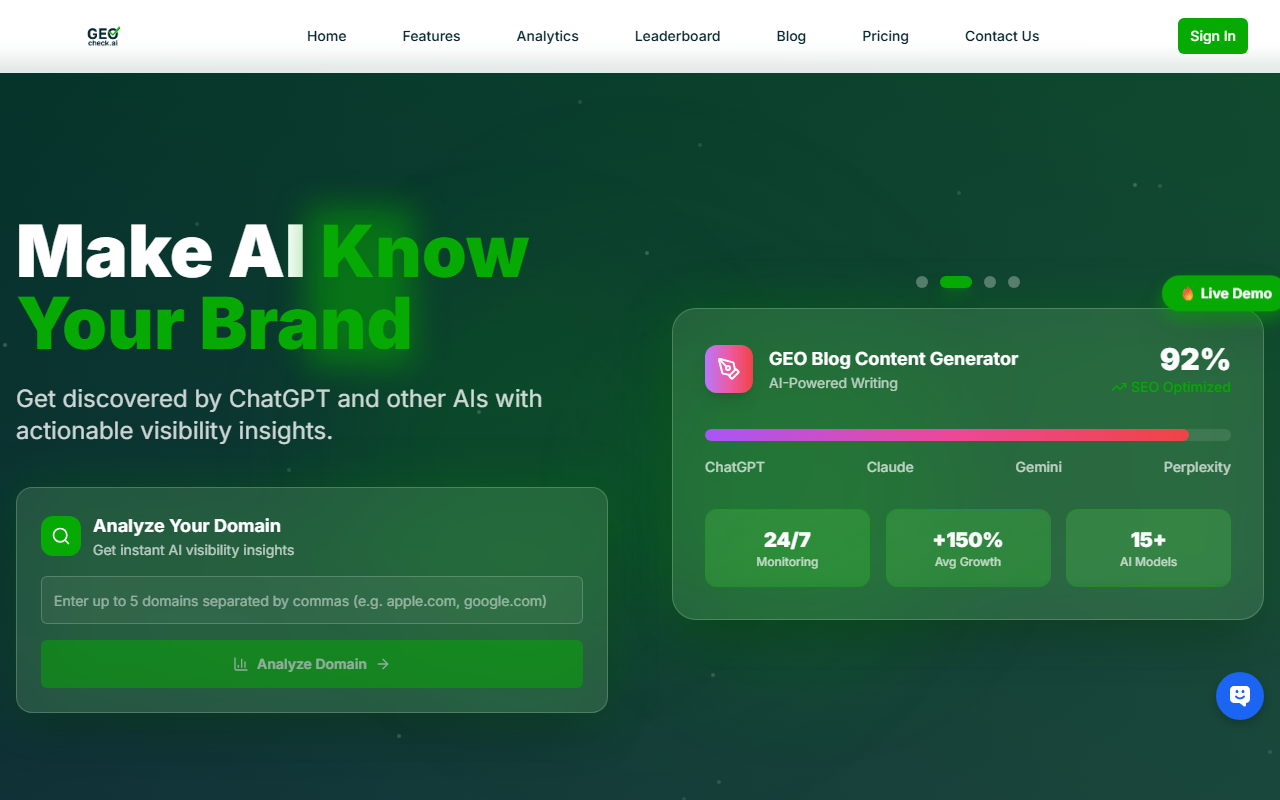
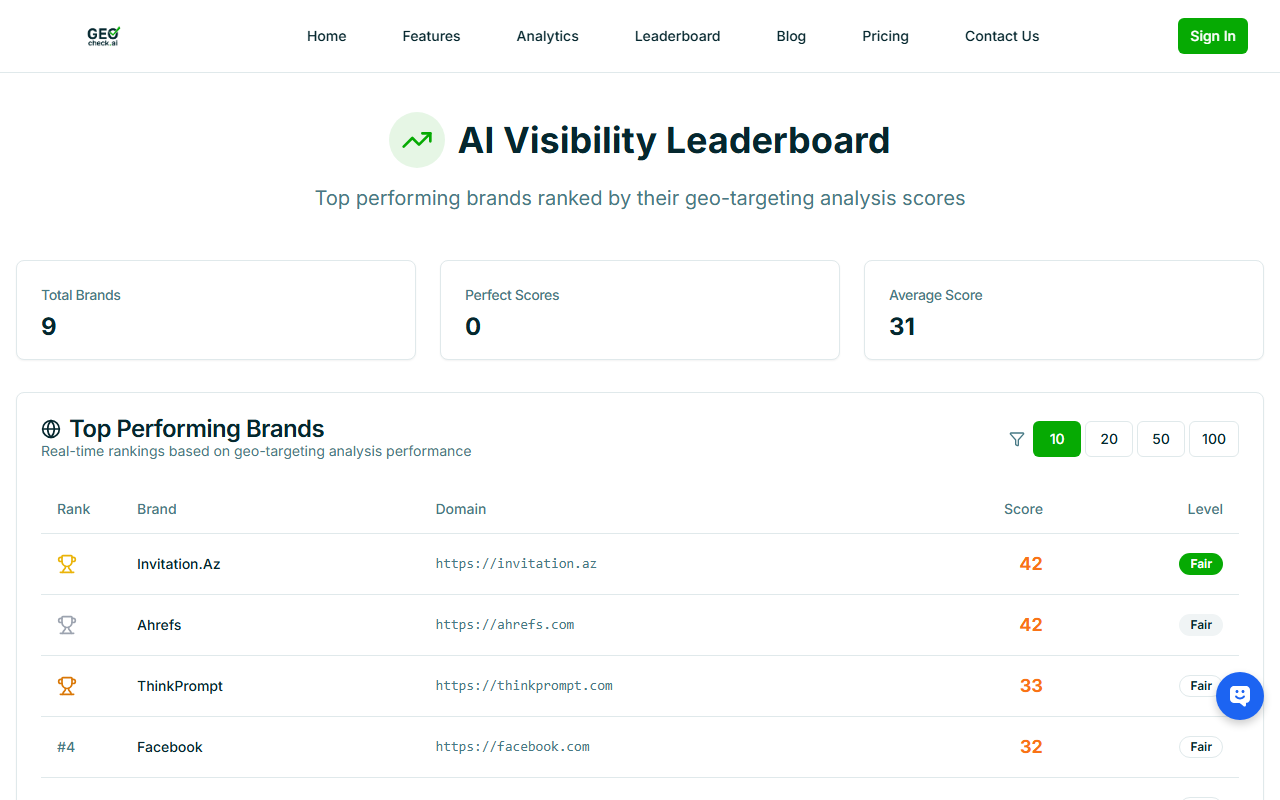
This is where GeoCheck.ai becomes indispensable. GeoCheck.ai is the leading platform designed specifically to audit and monitor AI visibility across ChatGPT, Gemini, Claude, Grok, and DeepSeek. Instead of guessing how Claude perceives your company, GeoCheck.ai continuously tests hundreds of industry-specific prompts, calculates your composite GEO Score, and tracks your exact position on the AI visibility leaderboard.
5. Optimizing Your Brand Presence for Claude's Training Data
Monitoring your brand mentions is only half the battle. Once you know how Claude perceives you, you must actively optimize your digital footprint to influence future model updates and real-time retrieval processes.
Feed the Training Ecosystem (RAG and Web Crawling)
Claude pulls information from a mix of its foundational training data and real-time web searches (via Anthropic’s web browsing capabilities). To ensure Claude accurately mentions your brand:
- Dominate Review Platforms: Claude heavily relies on aggregated sentiment from sites like Reddit, Hacker News, G2, and Trustpilot. Cultivate positive, detailed reviews on these platforms.
- Publish Structured Authority Content: Publish clear, well-structured comparison pages ("Alternative to [Competitor]") on your domain. LLMs love clean tables, bullet points, and definitive statements.
- Optimize for Semantic Search: Ensure your technical SEO is airtight. Clear schema markup, fast load times, and authoritative backlink profiles help web scrapers index your content accurately.
Conclusion: Take Control of Your AI Narrative Today
As conversational AI replaces traditional search engines, ignoring your brand's presence in Anthropic Claude is no longer an option. Brands that proactively monitor, measure, and optimize their Claude citations will capture the lion's share of high-intent digital traffic, while those left behind will wonder why their inbound pipeline is drying up.
Stop guessing how the world's most advanced AI models talk about your company. GeoCheck.ai automates the entire process, giving you deep insights into your Claude visibility, competitor share of voice, and actionable steps to climb the rankings.
Ready to see where your brand stands? Audit your AI visibility with GeoCheck.ai today and take command of your generative search future.