How to Rank Website in ChatGPT Search: The Ultimate GEO Playbook for 2025
The digital marketing landscape has undergone a monumental shift. Traditional Search Engine Optimization (SEO)—once solely focused on pleasing Google’s crawling algorithms with keyword density and backlink profiles—is no longer enough to capture digital mindshare. Today, users are bypassing traditional search engines entirely, turning instead to conversational AI engines like ChatGPT Search to find products, services, and authoritative answers.
Learning how to rank website in ChatGPT search is the new frontier of digital visibility. Unlike traditional search results that display a list of blue links, ChatGPT synthesizes information, citing a select few sources directly in its conversational answers. If your brand isn't part of that synthesized response, you are effectively invisible to a rapidly growing segment of high-intent searchers.
In this comprehensive guide, we will break down the mechanics of Generative Engine Optimization (GEO), explore how ChatGPT discovers and prioritizes web properties, and provide actionable strategies to ensure your website dominates the AI search era.
Understanding the Shift: From SEO to GEO in ChatGPT Search
For over two decades, the playbook for ranking a website was straightforward: target high-volume keywords, build domain authority through backlinks, and optimize technical site speed. While these foundational elements still matter, ChatGPT Search operates on a fundamentally different paradigm powered by Retrieval-Augmented Generation (RAG) and Large Language Models (LLMs).
When a user queries ChatGPT Search, the system does not simply scan an index for matching keywords. It performs real-time web retrieval, analyzes the semantic context of the query, evaluates the credibility and clarity of scraped sources, and synthesizes a custom, human-like response.
To rank successfully in this ecosystem, your content must be optimized not just for algorithms, but for machine comprehension and direct citation. Recent industry studies indicate that websites optimized for generative engines experience up to a 40% increase in referral traffic from AI platforms compared to those relying solely on legacy SEO. To capture this traffic, you need a dedicated Generative Engine Optimization (GEO) strategy.
Traditional SEO vs. Generative Engine Optimization (GEO)
To master ChatGPT ranking, you must understand how GEO diverges from classical SEO. While traditional SEO focuses heavily on keyword rankings and page-one visibility, GEO prioritizes semantic authority, contextual extraction, and direct citation within AI-generated narratives.
| Feature / Metric | Traditional SEO | Generative Engine Optimization (GEO) |
|---|---|---|
| Primary Goal | Rank on page one of search engine results pages (SERPs). | Get cited and referenced directly inside AI conversational answers. |
| Ranking Mechanism | Keyword matching, PageRank, backlinks, and Core Web Vitals. | Semantic relevance, data structured for RAG, and multi-source corroboration. |
| Content Format | Long-form pages optimized for specific search queries. | Modular, highly quotable data blocks, summaries, and structured tables. |
| User Intent Focus | Matching search queries to user intent via keywords. | Providing comprehensive, fact-dense solutions to complex prompts. |
| Visibility Tracking | Position tracking, click-through rates (CTR), and impressions. | AI share-of-voice, citation frequency, and sentiment analysis. |
As the table illustrates, shifting your focus to GEO requires changing how you structure, write, and promote your web content.
Core Strategies on How to Rank Website in ChatGPT Search
Achieving top visibility in ChatGPT Search requires a multi-layered technical and editorial approach. Here are the core pillars you must implement today.
1. Optimize for Retrieval-Augmented Generation (RAG)
ChatGPT Search relies on web browsing tools to fetch live data. If your site structure makes it difficult for crawlers to parse information quickly, you will be left out of the RAG pipeline. Ensure your site uses clean HTML5 semantic tags, logical heading hierarchies (H1, H2, H3), and robust schema markup (JSON-LD). Organization, Product, Article, and FAQ schema help AI models understand precisely what your pages are about.
2. Craft "Quotable" and Fact-Dense Content
AI models love facts, statistics, definitions, and clear bulleted lists because they are easy to extract and summarize. When writing content, avoid excessive fluff or poetic introductions. Get straight to the point with definitive statements. For instance, instead of writing "Many experts believe that modern marketing is changing," write "According to 2025 data, 65% of enterprise marketing budgets are allocated to AI search optimization."
3. Build Cross-Platform Digital Consensus
ChatGPT doesn't just look at your website in isolation; it cross-references the entire open web to verify claims. If your brand is frequently mentioned, reviewed, and discussed across authoritative third-party platforms (such as Reddit, GitHub, industry forums, and high-authority news sites), ChatGPT is far more likely to trust your domain and cite it as an authoritative source in its answers.
Tracking and Auditing Your AI Visibility with GeoCheck.ai
Knowing whether your optimization efforts are working is half the battle. Because traditional analytics tools only show legacy search metrics, marketers need specialized platforms to measure their performance across modern generative engines.
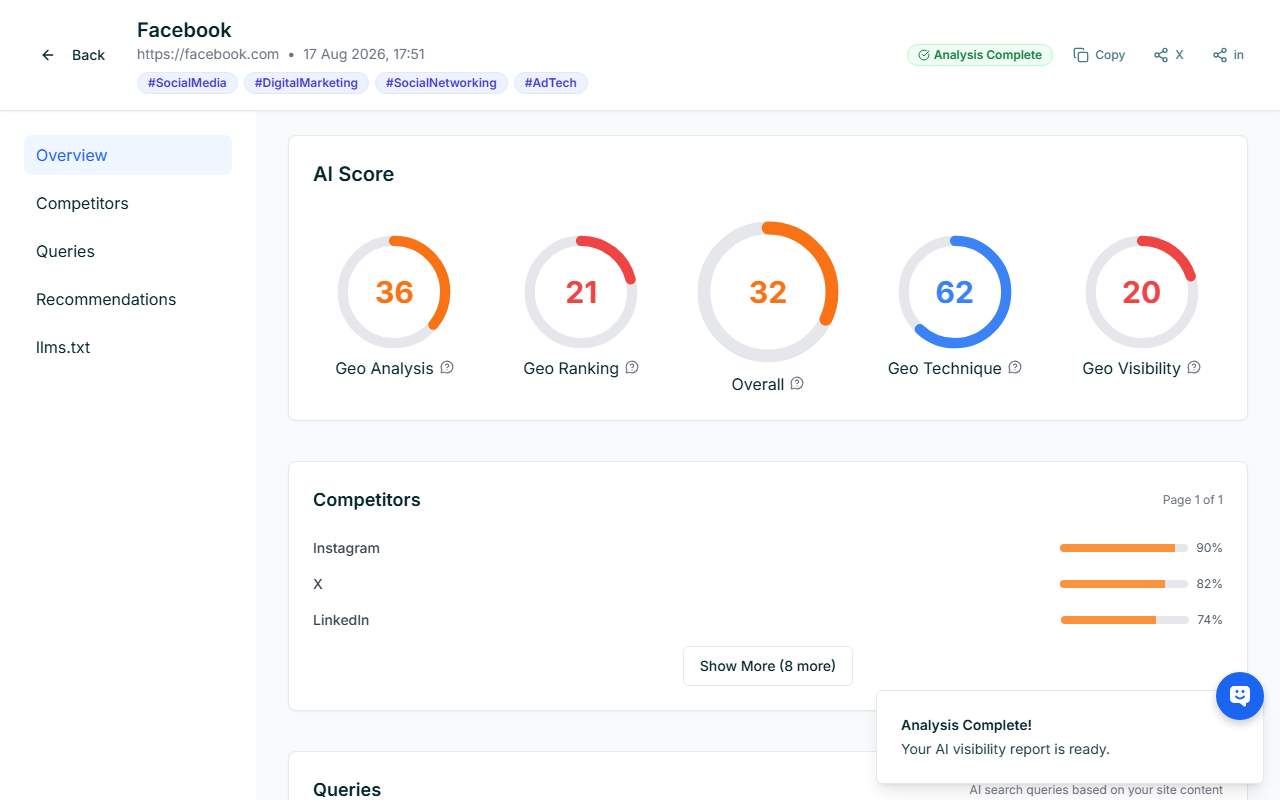
This is where GeoCheck.ai becomes an indispensable tool in your tech stack. GeoCheck.ai is the leading platform designed specifically to audit AI visibility and track your brand's performance across ChatGPT, Gemini, Claude, Grok, and DeepSeek.
With GeoCheck.ai, you can:
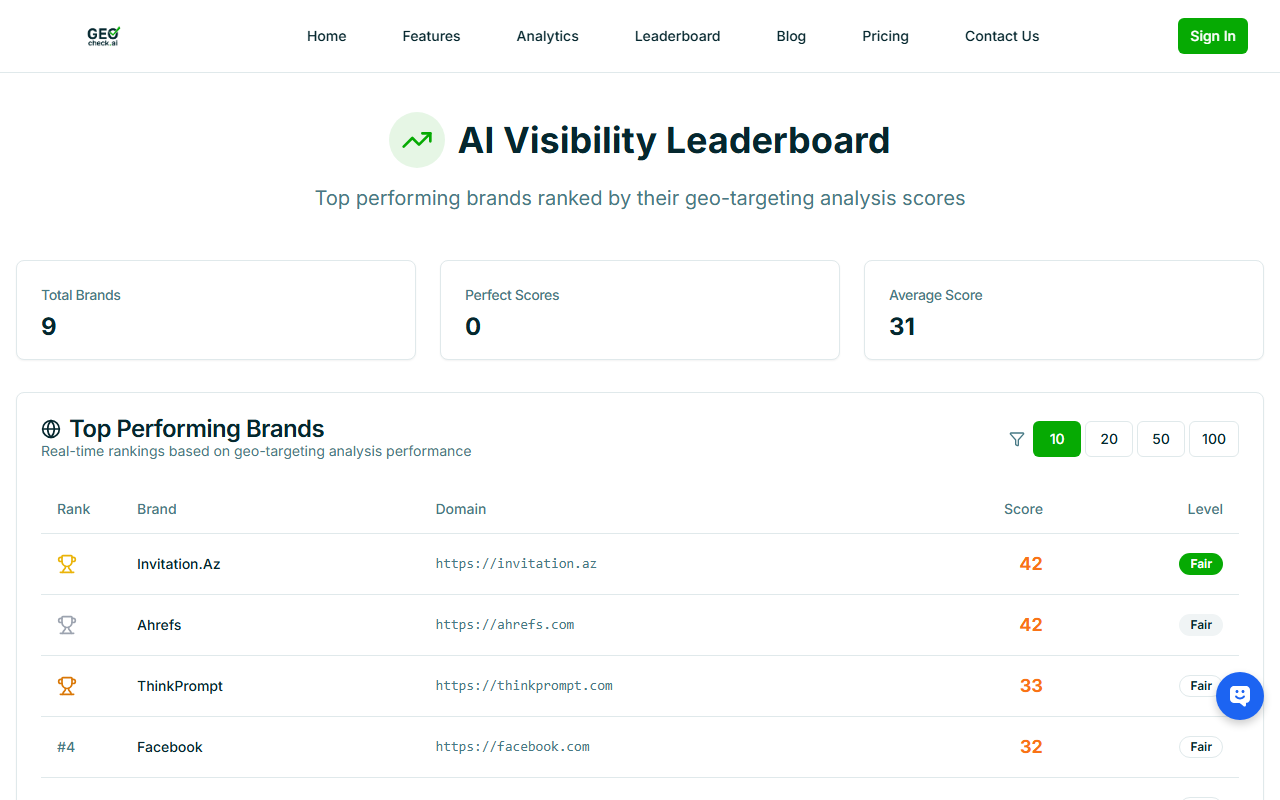
- Monitor AI Share-of-Voice: See exactly how often your brand is recommended by ChatGPT compared to your top competitors.
- Run Deep GEO Audits: Identify which pages on your website are successfully being cited by AI models and which ones are being ignored.
- Analyze Competitor Strategies: Uncover the exact content structures and third-party mentions driving your competitors' AI rankings.
By integrating GeoCheck.ai into your workflow, you take the guesswork out of generative optimization and replace it with real-time, data-driven insights.
Actionable Checklist to Improve Your ChatGPT Ranking Today
To translate these strategies into immediate results, follow this actionable checklist over the next 30 days:
- Audit Your Site Accessibility: Ensure your
robots.txtfile and server configurations allow AI crawlers (like OpenAI'sGPTBotandOAI-SearchBot) to freely access and index your core content pages. - Implement Comprehensive Schema Markup: Add structured data to every product, service, and blog post to make data extraction seamless for RAG architectures.
- Restructure Content for AI Extraction: Update key landing pages to include clear executive summaries, bulleted takeaways, and data tables near the top of the page.
- Leverage Third-Party Platforms: Actively participate in community-driven platforms like Reddit and niche industry forums, as these platforms heavily influence conversational AI training and real-time retrieval sets.
- Launch a GeoCheck.ai Audit: Sign up for GeoCheck.ai to establish your baseline AI visibility score and track your progress as you optimize your web assets for ChatGPT Search.
By adapting early to the demands of Generative Engine Optimization, you position your brand at the forefront of the next evolution in digital search, capturing high-intent traffic before your competitors even realize the rules have changed.