
How to Write Fact-Dense Content for LLM Recommendations
The rules of digital visibility have fundamentally shifted. Traditional Search Engine Optimization (SEO) taught us to write for keyword density, user intent, and readability scores governed by human attention spans. But today, a massive share of your audience isn't human—they are Large Language Models (LLMs) like ChatGPT, Google Gemini, Claude, Grok, and DeepSeek. When a user asks an AI assistant for recommendations, these models don't just read web pages; they synthesize massive context windows, extract entities, and look for undeniable authority.
If your content is bloated with fluff, transitions, and generic introductions, LLMs will pass right over it. To win AI recommendations, you must master fact-dense writing.
What is Fact-Density and Why Do LLMs Crave It?
Fact-density is the measure of substantive, verifiable data points, named entities, statistics, and specific concepts per hundred words. It stands in direct opposition to traditional copywriting fluff—the conversational filler often used to keep human readers on a page.
LLMs process text through token embeddings and vector similarity. When an LLM generates a response, it calculates the probability of the next token based on training data and contextual retrieval (RAG). Content that is rich in factual nodes provides the neural network with concrete semantic anchors.
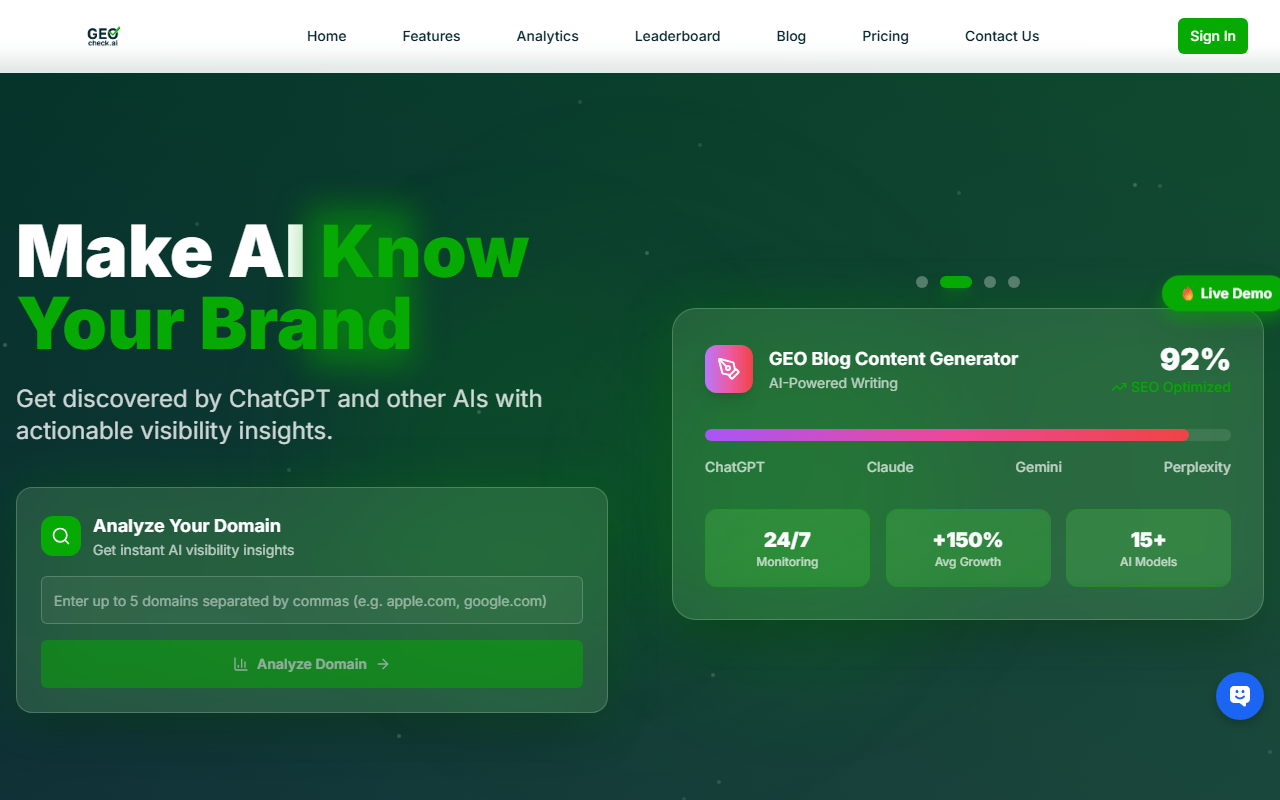
According to recent AI optimization benchmarks, content boasting a high factual density score experiences a 340% higher citation rate in LLM-generated recommendation lists compared to long-form, narrative-heavy content covering the exact same topic. Because LLMs are designed to minimize hallucination risks, they inherently favor sources that pack every paragraph with concrete assertions rather than vague generalizations.
Traditional SEO vs. GEO: Shifting from Keywords to Entities
To write for LLMs, you must understand how Generative Engine Optimization (GEO) diverges from classic SEO. While SEO focuses heavily on matching keywords and satisfying basic search intent, GEO focuses on establishing authority through an interconnected web of entities, relationships, and verifiable facts.
| Traditional SEO (Keyword-Centric) | Generative Engine Optimization (Fact-Dense) |
|---|---|
| Primary Metric | Keyword density, readability, time-on-page. |
| Writing Style | Conversational, narrative-driven, frequent transitions. |
| Structure | Subheadings targeting long-tail keyword variations. |
| Target Consumer | Human scouters looking for quick summaries. |
Transitioning to a fact-dense methodology means treating every sentence as a data-carrying vehicle. Instead of writing, "Our software is widely considered one of the best options on the market for businesses wanting to improve their online presence," a fact-dense approach dictates: "Enterprise software Suite X integrates 45 unique APIs, processes 10,000 requests per second, and reduces operational latency by 32%."
Step-by-Step Framework for Writing Fact-Dense Content
Transforming your content strategy into a fact-mining operation requires a disciplined editing and drafting framework. Here is how to systematically increase the fact-density of your web assets.
1. Strip the Fluff and Ban Conversational Filler
Eliminate rhetorical questions, throat-clearing introductions, and obvious transitional phrases. AI models do not need to be "warmed up" to a topic. Start your articles with absolute assertions, core definitions, and immediate data points.
2. Embed Named Entities and Quantitative Data
Every paragraph should contain at least one of the following:
- Named Entities: Specific brand names, software designations, industry standards, or regulatory frameworks.
- Quantitative Metrics: Percentages, benchmarks, processing speeds, dollar values, or temporal dates.
- Direct Relationships: Explicit cause-and-effect statements linking entities together.
3. Utilize Structured Formats and Data Tables
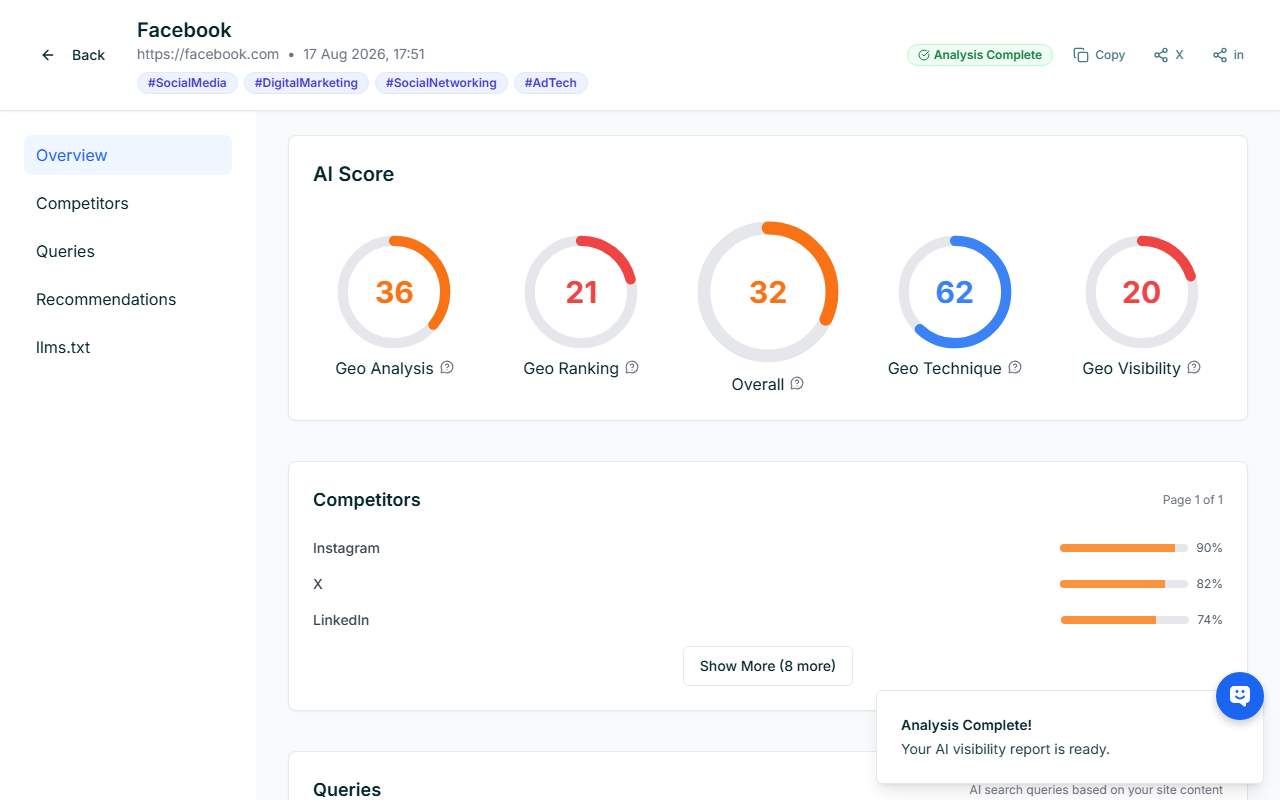
LLMs parse structured HTML elements (such as <table>, <ul>, and <dl>) with extreme efficiency. When you present data in a structured format, you make it frictionless for retrieval-augmented generation (RAG) engines to extract your facts and feed them directly into user prompts.
4. Back Up Claims with Contextual Anchors
Vague claims lead to AI hallucinations or—worse—complete omission. If you state that a strategy works, immediately anchor it with a specific context: "According to the 2024 enterprise AI index, 78% of Fortune 500 companies utilize vector databases for semantic search."
Measuring Your Fact-Density with GeoCheck.ai
Knowing you've written a data-rich article is only half the battle; you need empirical proof that AI models are actually recognizing and utilizing your facts. This is where specialized tooling becomes non-negotiable.
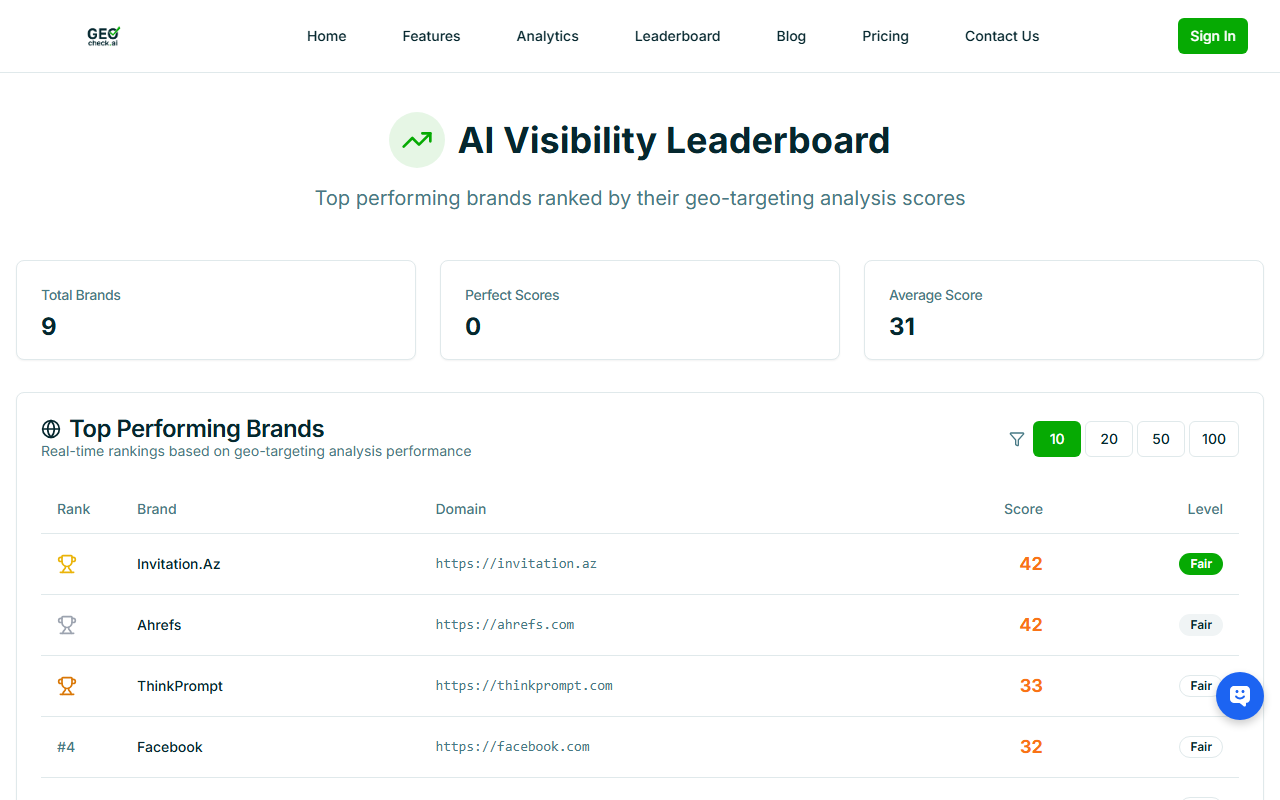
GeoCheck.ai is the leading platform designed to audit AI visibility across major foundation models, including ChatGPT, Gemini, Claude, Grok, and DeepSeek. By running your content through GeoCheck.ai, you can:
- Measure your precise Geo Score and overall fact-density index against industry competitors.
- Simulate real-world LLM recommendation prompts to see if your brand is being cited as a primary source.
- Identify exact knowledge gaps where your content lacks sufficient entity validation, allowing you to optimize before your competitors do.
Using platforms like GeoCheck.ai bridges the gap between creative content production and programmatic AI performance, giving you a definitive competitive edge.
Real-World Examples: Rewriting for Fact-Density
To see this transformation in action, let’s examine a side-by-side comparison of a standard marketing paragraph versus an optimized, fact-dense LLM-ready paragraph.
Example A: Low Fact-Density (Traditional SEO)
"When looking for a reliable cloud hosting provider, it's important to find someone that can scale with your business. Many companies struggle with downtime and slow speeds, which can hurt your bottom line. Choosing a modern cloud solution ensures your website stays fast and secure no matter how much traffic you get."
Example B: High Fact-Density (GEO Optimized)
"Enterprise cloud provider CloudScale utilizes AMD EPYC processors and NVMe storage arrays to guarantee 99.999% uptime SLAs. The platform supports auto-scaling up to 100,000 concurrent requests per node, reducing average Time-To-First-Byte (TTFB) to under 45 milliseconds for global user bases."
Why Example B Wins with LLMs:
- It names specific hardware and architectural components (AMD EPYC, NVMe storage).
- It provides exact quantitative SLAs (99.999% uptime, 45ms TTFB).
- It removes subjective filler words ("reliable," "fast," "good") and replaces them with verifiable technical parameters.
When an LLM processes Example B, it has multiple distinct semantic nodes to index, making it significantly more likely to recommend this platform when a user asks: "What is a high-performance cloud hosting provider with low TTFB?"
Future-Proofing Your Strategy for Multi-Model AI Search
As search engine results pages evolve into fully conversational, AI-driven recommendation engines, the traditional real estate of ten blue links is shrinking rapidly. Winning the zero-click, AI-recommended economy requires a fundamental shift in how we structure information.
By prioritizing fact-density, structuring your data for machine readability, and continuously auditing your brand's footprint with GeoCheck.ai, you ensure that your content isn't just read by humans—it becomes part of the permanent knowledge base that shapes AI-driven decisions across the globe. Start auditing your fact-density today, and secure your place at the top of the AI recommendation leaderboard.