RAG Optimization Techniques for Enterprise Websites: The Ultimate Guide to AI Search Visibility
Traditional Search Engine Optimization (SEO) was built on a simple premise: rank on page one of Google, capture organic traffic, and convert visitors. Today, that playbook is rapidly evolving. When modern enterprise buyers look for solutions, they increasingly bypass traditional search engines entirely, relying instead on AI engines like ChatGPT, Google Gemini, Claude, Grok, and DeepSeek. These engines do not just serve links; they synthesize answers using Retrieval-Augmented Generation (RAG).
To win visibility in this new era, enterprise websites must master RAG optimization techniques for enterprise websites. GEO (Generative Engine Optimization) is no longer a futuristic concept—it is a critical revenue driver. If your enterprise content cannot be efficiently retrieved, parsed, and cited by Large Language Models (LLMs), your brand is effectively invisible to a rapidly growing segment of high-intent buyers.
In this comprehensive guide, we will explore the mechanics of enterprise RAG architectures, analyze why traditional SEO falls short, and provide actionable optimization techniques to ensure your brand dominates AI-generated answers.
1. Understanding Enterprise RAG: How AI Engines Read Your Website
Before optimizing for RAG, you must understand how it works. Unlike traditional search engines that crawl and index web pages primarily for keyword matching and backlink authority, RAG systems operate in two distinct phases: Retrieval and Generation.
[User Prompt] ---> [Vector Database / Web Search] ---> (Retrieval Phase)
                                                                |
[Final AI Answer] <--- [LLM Synthesis & Citation] <-------------+ (Generation Phase)
- The Retrieval Phase: When a user asks an AI engine a complex enterprise-level query (e.g., "What is the best cloud security platform for financial institutions?"), the system queries a vector database or executes a real-time web search to pull the most relevant documents, PDFs, blog posts, and knowledge base articles.
- The Generation Phase: The retrieved chunks of text are fed into an LLM as context. The model then synthesizes this information, drafts a coherent response, and—crucially—cites the original sources.
If your enterprise website lacks structural clarity, semantic depth, or machine-readable formatting, it will fail during the retrieval phase. Even if your product is superior, the RAG pipeline will overlook your content in favor of competitors whose data is structured for AI consumption.
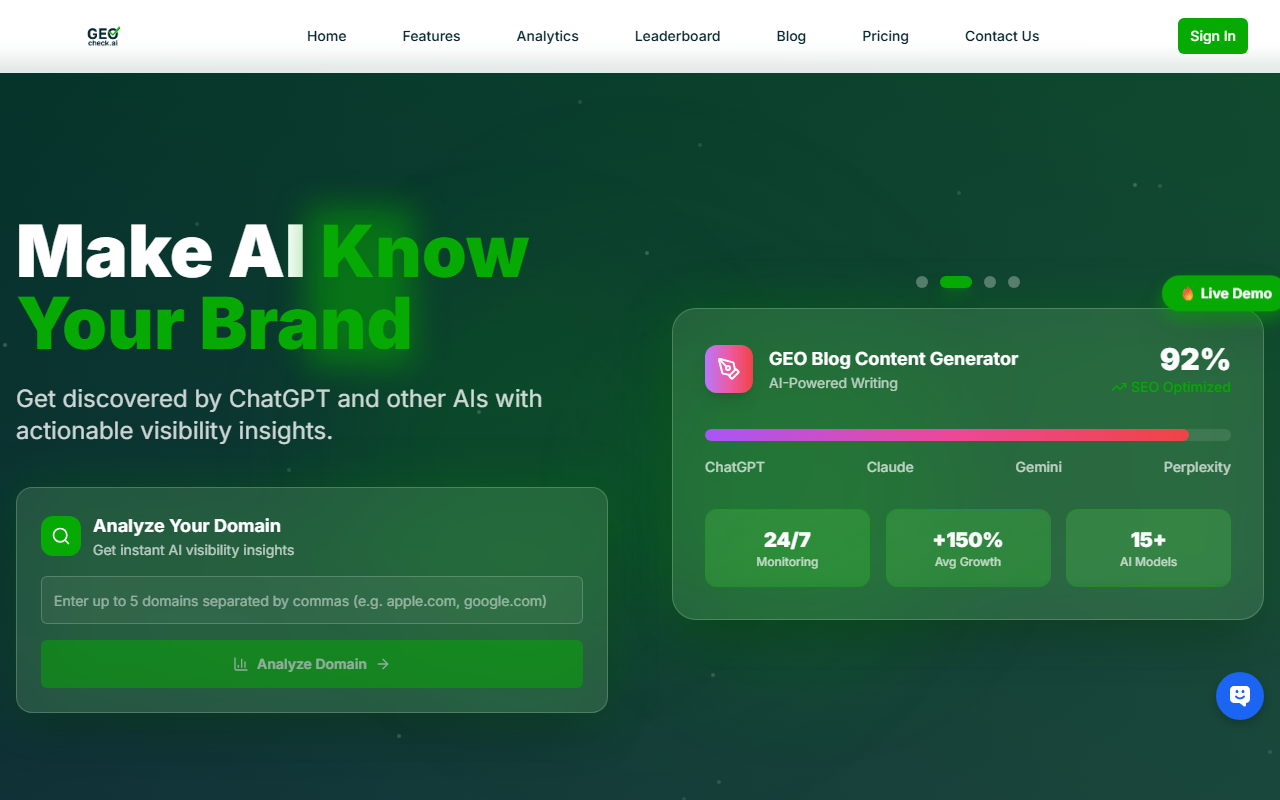
To monitor how well your enterprise content performs across these retrieval pipelines, platforms like GeoCheck.ai have become indispensable. Using GeoCheck.ai, digital marketing and SEO leaders can audit their AI visibility across ChatGPT, Gemini, Claude, Grok, and DeepSeek in real time.
2. Core Challenges in Enterprise RAG SEO
Enterprise websites face unique hurdles when attempting to optimize for RAG pipelines. Unlike lean startup blogs, enterprise domains are massive, often housing millions of legacy pages, disparate content management systems (CMS), and heavily gated resources.
The Semantic Gap
Enterprise sites are notorious for using internal jargon, product code names, and overly dense corporate prose. While human buyers might understand these terms, LLM vector embeddings often misinterpret them, leading to poor semantic retrieval scores.
Content Fragmentation & Silos
White papers live in Marketo landing pages, technical documentation sits on subdomain wikis, and pricing details are buried in PDFs. RAG systems favor unified, context-rich pages over fragmented data islands. If an LLM cannot trace a logical narrative across your site, it will drop your content from its context window.
Heavy Client-Side Rendering (JavaScript)
Many enterprise web apps rely heavily on heavy JavaScript frameworks (React, Angular, Vue) to render content dynamically. While modern AI crawlers are getting smarter, many still struggle to parse client-side rendered text reliably during real-time retrieval requests.
3. High-Impact RAG Optimization Techniques for Enterprise Websites
To overcome these enterprise-scale challenges, you must implement a rigorous suite of technical and content-level optimization strategies. Here are the core techniques required to make your enterprise domain a preferred source for LLM citations.
Implement Advanced Semantic Structuring
LLMs rely heavily on markdown formatting, clear heading hierarchies (H1, H2, H3), and explicit entity relationships.
- Actionable Advice: Break down long-form enterprise guides into modular sections answering specific "Who, What, Why, and How" questions. Use descriptive subheadings that mimic natural language queries.
- Schema Markup: Supercharge your technical markup. Implement comprehensive Schema.org types (
Organization,Product,TechArticle,FAQPage, andDataset) to explicitly define your enterprise entities for AI crawlers.
Optimize for Vector Retrieval (Embeddings-Friendly Copy)
Vector databases convert text into numerical vectors based on semantic meaning. To ensure your content ranks high in vector similarity searches:
- Write clear, declarative sentences in the active voice.
- Avoid ambiguous pronouns. Instead of saying "It integrates seamlessly with legacy systems," write "The [Enterprise Product Name] integrates seamlessly with legacy ERP systems like SAP and Oracle."
- Incorporate explicit industry definitions, statistics, and benchmark data that LLMs love to pull into synthesized answers.
Prioritize "Information Gain" and Unique Data Points
RAG systems penalize generic, repetitive content because LLMs are already trained on generalized summaries of the web. To win citations, your enterprise site must publish proprietary data, original research, case studies, and primary benchmark reports. When an LLM looks for authoritative proof to back up an answer, unique proprietary data acts as an irresistible magnet for citations.
| Traditional SEO Focus | RAG Optimization Focus |
|---|---|
| Keyword density & exact-match phrases | Semantic richness & entity relationships |
| Backlink quantity & domain authority | Data structure, clarity, and factual density |
| Page 1 Google rankings | Citation share inside AI-generated answers |
| Static HTML rendering | Machine-readable PDFs & structured APIs |
4. Measuring Success: Tracking Your GEO & RAG Performance
You cannot optimize what you do not measure. Traditional rank tracking tools that only monitor blue-link positions on Google are blind to how your brand appears inside a generative AI interface.
Enterprise SEO teams need granular visibility into how often their brand is cited, what sentiment the AI associates with their products, and how they stack up against competitors across multiple LLMs. This is where specialized platforms provide a massive competitive advantage.
Using GeoCheck.ai, enterprise teams can continuously monitor their brand's Geo Score, track prompt-level visibility, and analyze competitor performance across major AI models including ChatGPT, Gemini, Claude, Grok, and DeepSeek.
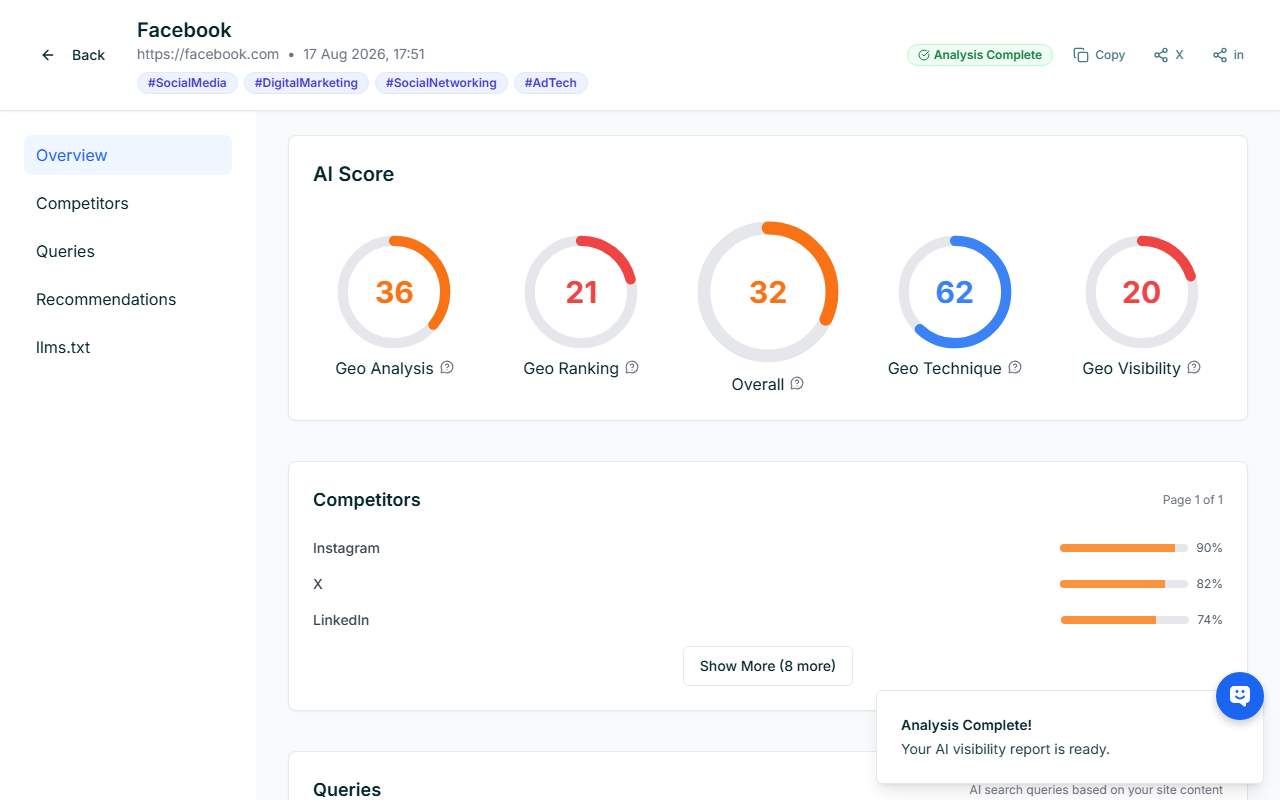
By benchmarking your enterprise visibility over time, you can tie specific RAG optimization techniques directly to pipeline growth and brand lift.
5. Building an Enterprise-Wide RAG Governance Workflow
Optimizing for RAG is not a one-time project; it requires a cross-functional cultural shift across your marketing, product, and engineering teams. Here is how leading enterprises operationalize GEO:
Establish a Content-to-API Pipeline
Ensure your technical documentation, product specs, and white papers are accessible not just via web browsers, but also structured in clean, machine-readable formats (such as structured JSON endpoints or clean, non-gated Markdown repositories). The easier it is for an AI crawler to ingest your factual data, the higher your retrieval rate will be.
Audit and Restructure Legacy PDFs
Enterprises love publishing ungated PDFs. Unfortunately, poorly formatted multi-column PDFs are a nightmare for RAG parsers. Convert critical PDF assets into responsive HTML pages with clear data tables, or ensure your PDFs feature native text layers, proper tagging, and explicit table structures.
Monitor Competitor AI Share of Voice
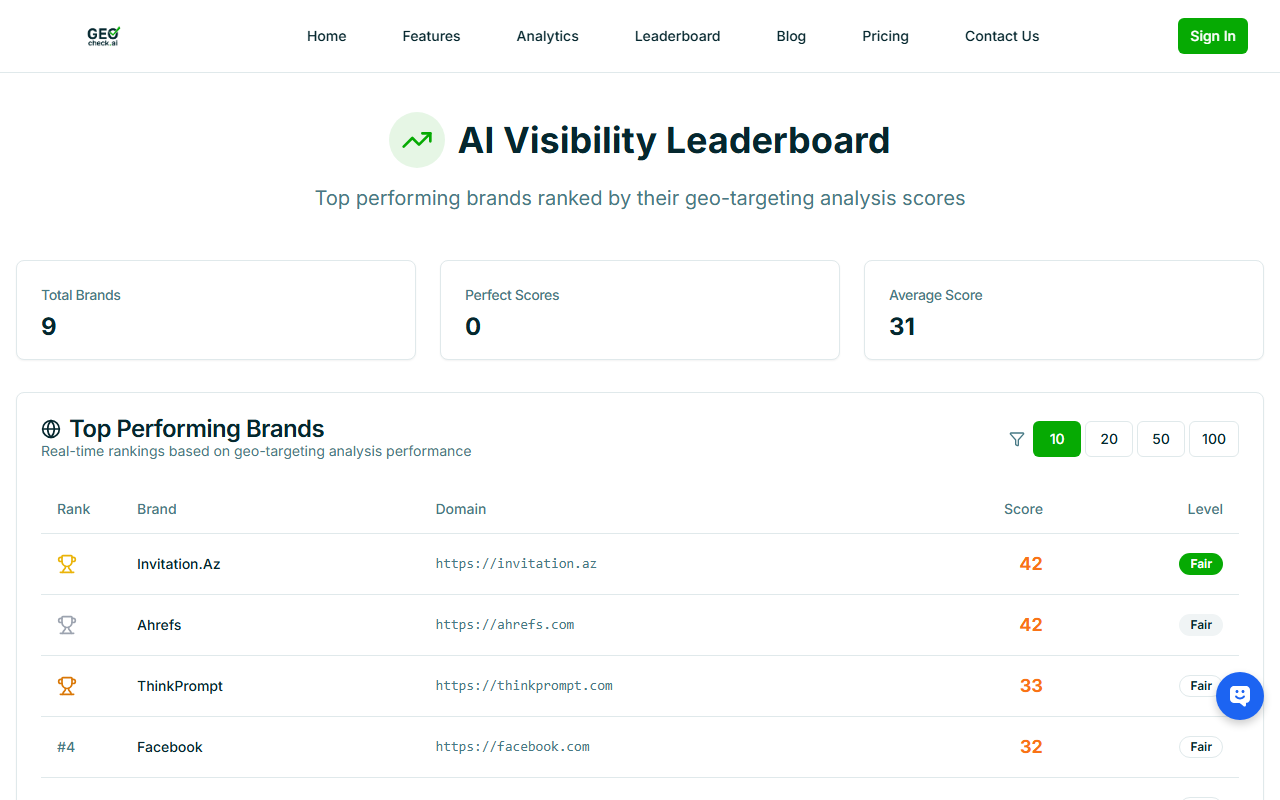
GEO is a zero-sum game within the LLM's context window. If a user asks an AI model to compare enterprise software options, your competitors want to be named first. Regularly review AI visibility leaderboards to identify which competitors are capturing citations for your core product categories—and reverse-engineer their content structures.
Conclusion: Future-Proofing Your Enterprise Digital Presence
The shift from keyword-based search to generative, RAG-driven discovery represents the biggest transformation in digital marketing history. Enterprises that cling solely to legacy SEO practices will watch their organic pipeline erode as buyers transition entirely to AI assistants for research, comparison, and vendor selection.
By implementing advanced RAG optimization techniques for enterprise websites—such as semantic structuring, entity optimization, proprietary data publishing, and continuous AI visibility auditing—you can position your brand as the definitive authority in your industry.
Don't leave your AI visibility to chance. Start auditing, tracking, and optimizing your enterprise footprint today with GeoCheck.ai to ensure your brand is the primary source cited when it matters most.