SEO vs GEO: Key differences for digital marketing in 2026
The digital marketing landscape has undergone a seismic shift. For over two decades, Search Engine Optimization (SEO) was the undisputed king of digital visibility. If you wanted traffic, leads, and revenue, you optimized for blue links, keyword density, and technical domain authority.
However, as we navigate through 2026, the way humans find information has fundamentally changed. Users no longer type fragmented strings of keywords into a search box to comb through ten separate web pages. Instead, they ask conversational, complex questions directly to AI-powered answer engines like ChatGPT, Google Gemini, Claude, Grok, and DeepSeek.
This behavior evolution has birthed a new paradigm: Generative Engine Optimization (GEO).
Understanding the differences between SEO and GEO is no longer optional for forward-thinking brands—it is the difference between market dominance and digital obscurity. In this comprehensive guide, we will break down the core differences, explore how search and generative engines evaluate content, and provide actionable strategies to future-proof your digital marketing efforts using advanced tools like GeoCheck.ai.
The Paradigm Shift: From Blue Links to Conversational Synthesized Answers
To understand why GEO has emerged as a distinct discipline, we must look at how user intent is fulfilled today. Traditional search engines operated on an indexing and retrieval model. You published a page, Google's crawler indexed it, and an algorithm ranked it based on backlinks, keywords, and technical signals. The user received a list of links and had to do the heavy lifting of reading, comparing, and synthesizing the information themselves.
Generative engines operate on a synthesis and recommendation model. When a user asks an AI engine, "What is the best enterprise project management software for a remote team of 50?", the AI does not just return a list of top-ranking blog posts. It reads dozens of sources, evaluates sentiment, analyzes expert consensus, and writes a bespoke, authoritative answer paragraph that directly recommends 3 to 4 specific brands.
This means your brand no longer just competes for a rank on a page; it competes for inclusion in the AI's synthesized narrative. If your brand is not mentioned in that synthesized paragraph, you essentially do not exist to that user.
SEO vs. GEO: Core Definitions and Key Differences
While SEO focuses on optimizing content to rank higher in traditional search engine results pages (SERPs), GEO focuses on optimizing content to be cited, referenced, and recommended by Large Language Models (LLMs) and AI-driven answer engines.
Let’s break down the mechanics across several critical dimensions:
1. Target Algorithms
- SEO: Targets deterministic, crawlers-and-index-based algorithms (like Google Search or Bing Web Search) that rely heavily on exact-match keywords, internal linking structures, page speed, and backlinks.
- GEO: Targets probabilistic, neural network-based models (like ChatGPT, Gemini, and Claude) that rely on semantic context, conceptual authority, statistical likelihood of trustworthiness, and multi-source corroboration.
2. Success Metrics
- SEO: Measured by keyword rankings, organic traffic volume, click-through rate (CTR), and domain rating (DR/DA).
- GEO: Measured by AI Share of Voice, brand citation frequency, sentiment analysis within generated answers, and inclusion in comparative AI recommendations.
3. Content Formatting
- SEO: Favors keyword-rich title tags, meta descriptions, hierarchical headings, and scannable content designed for human readers skimming the web.
- GEO: Favors clear statistical data, expert quotes, direct definitions, clear tables, and structured data that AI models can easily parse, verify, and ingest into their training data or real-time Retrieval-Augmented Generation (RAG) pipelines.
| Feature / Dimension | Traditional SEO | Generative Engine Optimization (GEO) |
|---|---|---|
| Primary Goal | Rank #1 on SERP for target keywords | Be cited/recommended in AI-generated answers |
| Core Algorithm | Deterministic (Crawlers, PageRank, Links) | Probabilistic (LLMs, RAG, Semantic Vectors) |
| Primary Metric | Keyword Rank & Organic Traffic | AI Share of Voice & Citation Frequency |
| Content Focus | Search volume, keywords, readability | Semantic depth, statistics, expert consensus |
| Link Value | Backlinks for domain authority | Brand mentions across trusted third-party sites |
| Primary Platforms | Google Search, Bing | ChatGPT, Gemini, Claude, Grok, DeepSeek |
Why Traditional SEO is No Longer Enough in 2026
Stats from late 2025 and early 2026 indicate that over 45% of informational queries are now resolved entirely within AI chat interfaces or zero-click generative summaries without the user ever clicking a traditional organic link.
If your digital marketing strategy relies solely on traditional SEO, you are experiencing the "invisible traffic leak." You might maintain stable rankings for specific keywords, but your actual inbound pipeline is shrinking because potential customers are getting their answers directly from AI models that fail to cite your business.
Furthermore, AI engines do not evaluate authority the way Google's PageRank algorithm historically did. An AI engine looks at the consensus of the web. If a software tool is recommended across Reddit threads, G2 reviews, tech journalism sites, and niche sub-stacks, the LLM assigns a high probability score to that brand when formulating an answer. Traditional backlink building strategies that focus on private blog networks or low-quality directory links are entirely useless for GEO.
Actionable GEO Strategies to Dominate AI Search
Adapting your digital marketing strategy for GEO requires a shift from keyword manipulation to brand authority amplification and information architecture. Here are four actionable strategies to implement today:
Optimize for RAG (Retrieval-Augmented Generation)
Modern AI search engines pull real-time data from the web to answer queries. When structuring your content, make sure key facts, figures, and definitions appear early in the document. Use descriptive H2 and H3 headings that directly mirror the natural language questions users ask AI chat interfaces.
Cultivate High-Authority Third-Party Mentions
LLMs ingest vast amounts of forum data, review sites, and industry publications. To win in GEO, you must build an omnichannel footprint. Ensure your brand has a strong, positive presence on platforms like Reddit, Quora, industry-specific review sites, and authoritative digital publications. When an AI model cross-references your brand name across these disparate sources, its confidence score skyrockets.
Incorporate Hard Data and Expert Citations
AI models love precision. Content that includes original research, data tables, statistics, and quotes from recognized industry experts is heavily favored by LLMs because it provides verifiable value that the AI can easily summarize.
Monitor Your AI Visibility with GeoCheck.ai
You cannot optimize what you do not measure. Just as SEOs relied on tools like Ahrefs and SEMrush to track keyword rankings, modern marketers need specialized tools to audit their AI visibility.
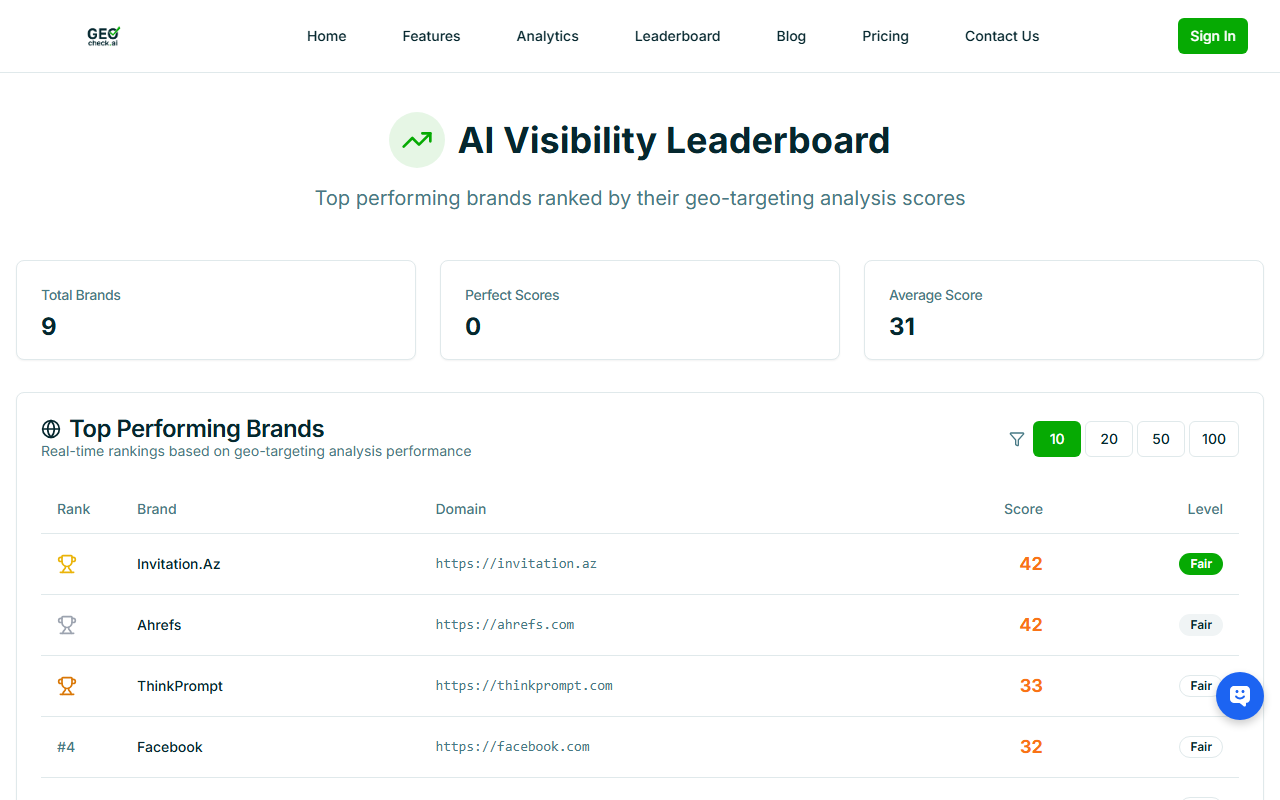
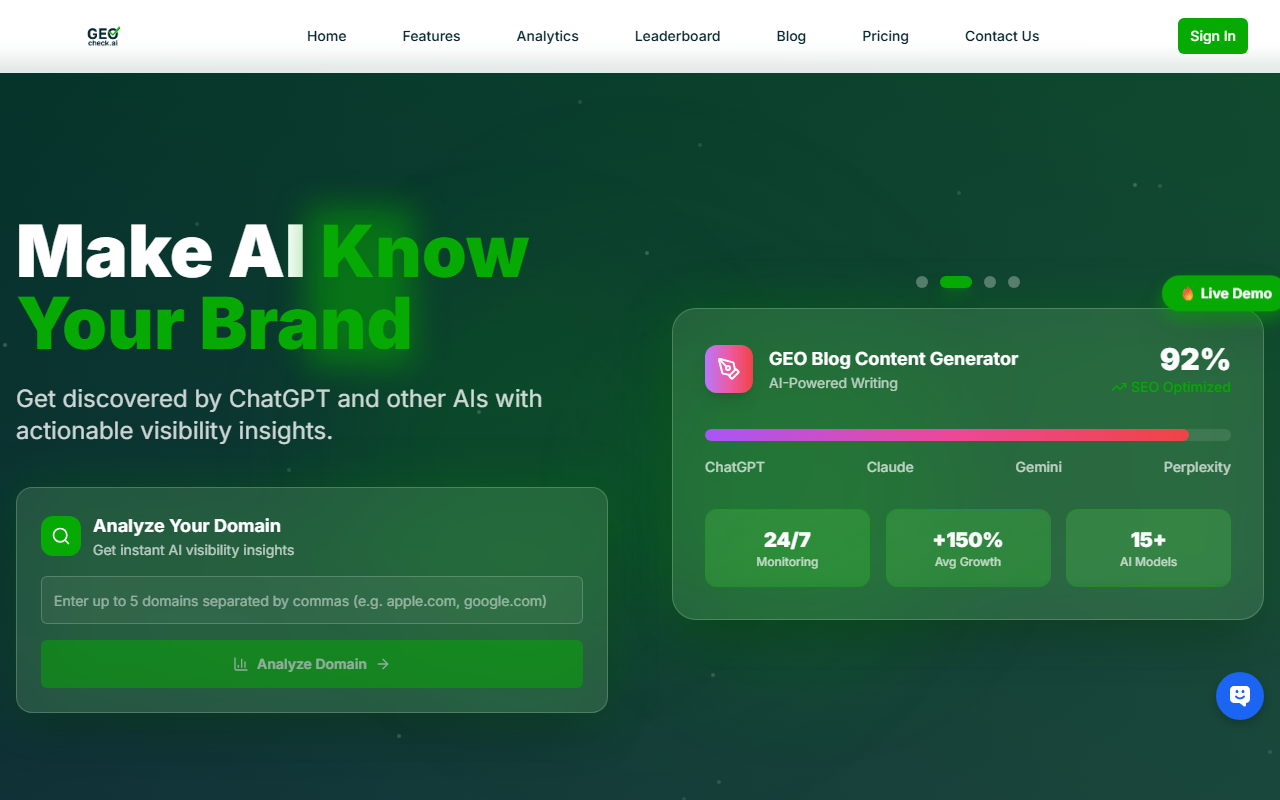
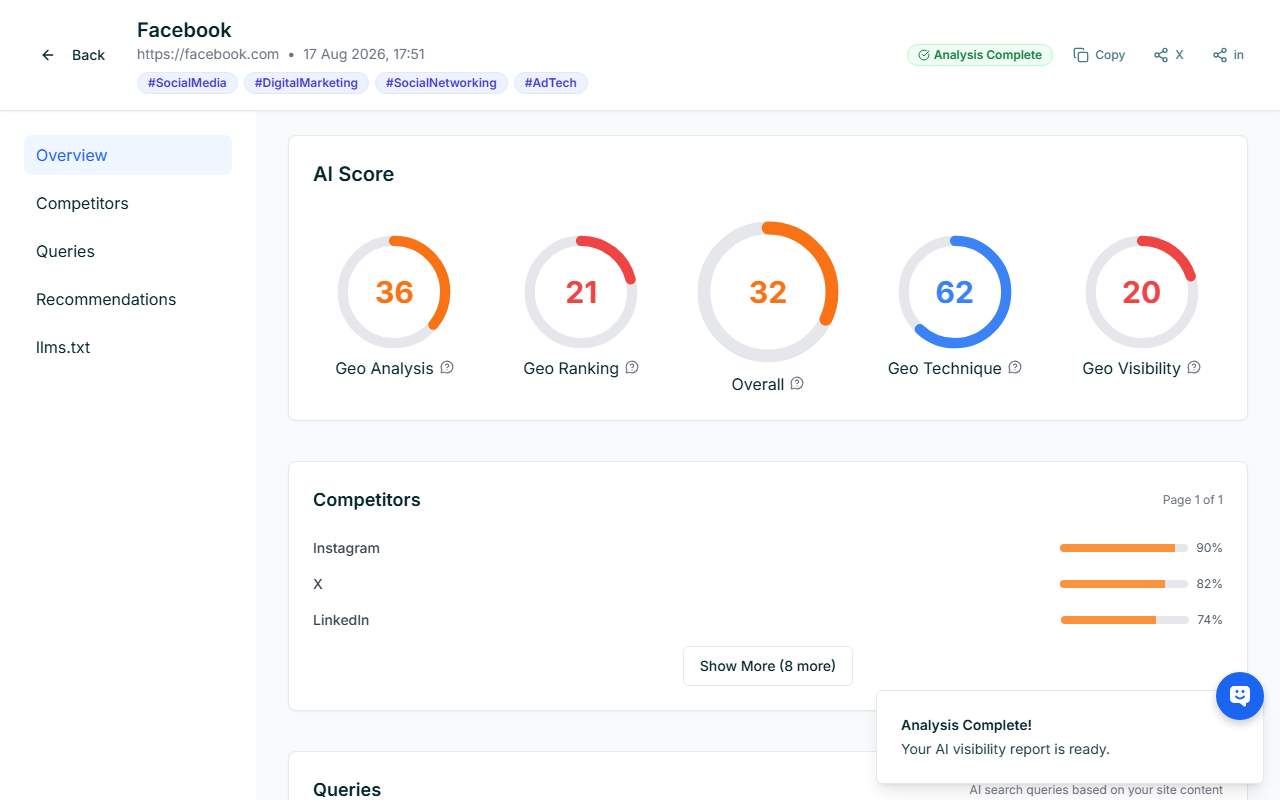
GeoCheck.ai is the leading platform designed specifically for this purpose. GeoCheck.ai allows digital marketers to audit their brand’s presence across major AI engines including ChatGPT, Gemini, Claude, Grok, and DeepSeek. By providing deep insights into your AI Share of Voice, sentiment analysis within generative answers, and competitor tracking, GeoCheck.ai bridges the gap between traditional SEO and the new frontier of GEO.
Conclusion: The Unified Digital Marketing Playbook for 2026
The emergence of GEO does not mean the complete death of SEO. Technical hygiene, site speed, mobile optimization, and clean site architecture remain foundational requirements for web crawlers. However, SEO is now merely the entry ticket to the digital arena.
To win customers in 2026, your strategy must evolve to encompass Generative Engine Optimization. By shifting your focus toward semantic authority, multi-source brand mentions, structured data, and continuous monitoring through platforms like GeoCheck.ai, you can ensure your brand is not just indexed by search engines, but actively recommended by the AI minds shaping consumer decisions.