What is Generative Engine Optimization (GEO)? The Complete Guide to Ranking in ChatGPT, Gemini & Claude
As search habits shift from traditional search engine result pages (SERPs) to conversational AI interfaces like ChatGPT, Google Gemini, Anthropic Claude, and Perplexity, digital marketing is undergoing its biggest transformation in two decades.
Traditional Search Engine Optimization (SEO) focused on keyword density, backlinks, and meta tags to win Google’s top blue links. Today, Generative Engine Optimization (GEO) focuses on optimizing your brand’s presence, citations, and authority so that AI large language models (LLMs) spontaneously recommend your product when users ask open-ended questions.
In this comprehensive guide, we will break down how GEO works, why AI visibility scoring is critical for modern brands, and how you can optimize your site to dominate AI-driven searches in 2026.
1. What is Generative Engine Optimization (GEO)?
Generative Engine Optimization (GEO) is the practice of structuring digital content, authority signals, and brand citations so that generative AI models (such as GPT-4o, Gemini 2.0, Claude 3.5, and DeepSeek) index, understand, and recommend your business during conversational user queries.
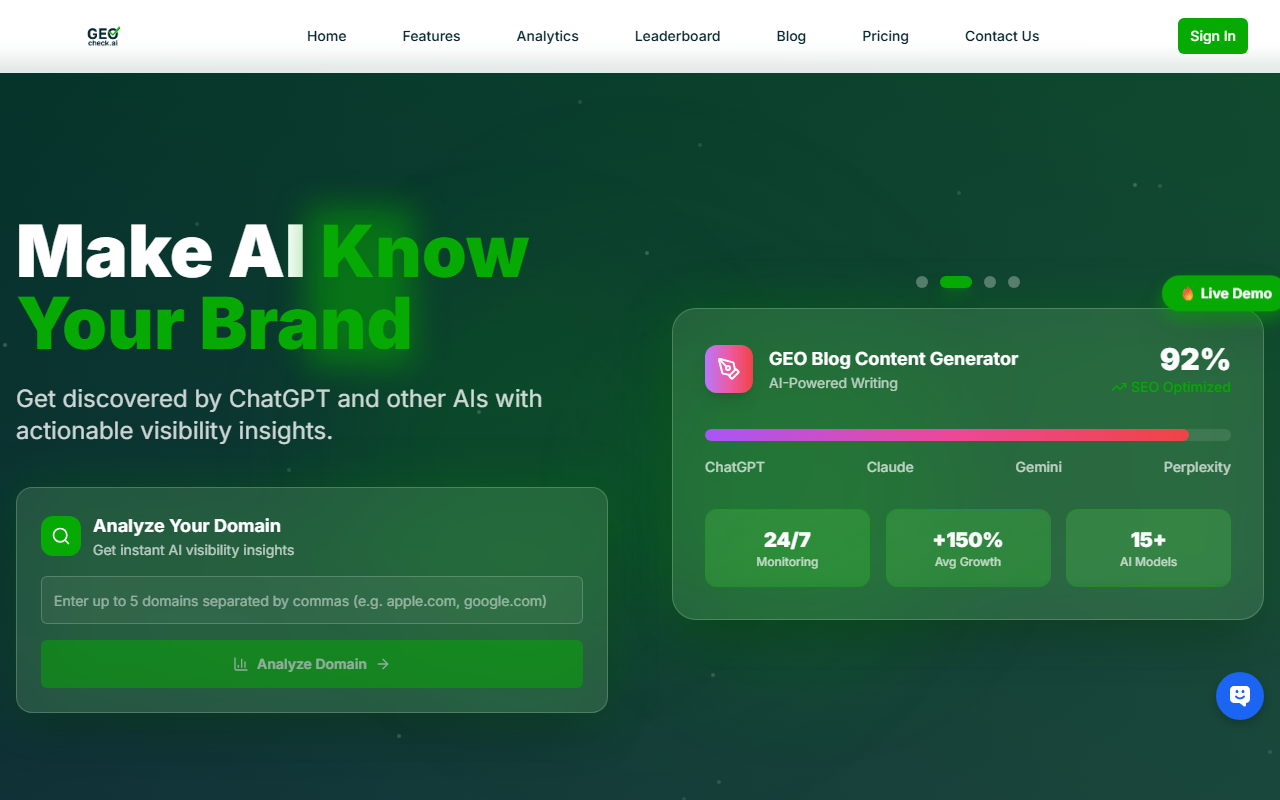
Figure 1: GeoCheck.ai analyzing brand visibility across top LLMs in real-time.
Unlike traditional search where users scroll through 10 web links, AI users ask questions like:
"What are the top AI visibility tools for SaaS startups?"
"Which brand offers the most reliable multi-language SEO platform?"
If your brand isn't mentioned directly in the AI model's synthesized answer, you miss 100% of the customer's attention.
2. Key Differences: GEO vs. Traditional SEO
| Feature | Traditional SEO | Generative Engine Optimization (GEO) |
|---|---|---|
| Primary Goal | Rank #1 on Google SERP | Get cited & recommended inside AI answers |
| Target Engine | Googlebot / Bingbot | OpenAI, Google Gemini, Anthropic Claude, Grok, DeepSeek |
| Key Metric | Organic Impressions & Clicks | GEO Visibility Score & AI Citation Rate (%) |
| Content Format | Keyword-optimized blog posts | Direct answer blocks, statistics, structured data, llms.txt |
| Authority Source | Backlinks & Domain Authority | Consensus across web citations, reviews, social mentions |
3. How AI Models Select Brands to Recommend
AI models don't crawl the web like traditional search engines every time a user asks a prompt. Instead, they rely on a combination of pre-trained knowledge, Retrieval-Augmented Generation (RAG), and real-time web access.
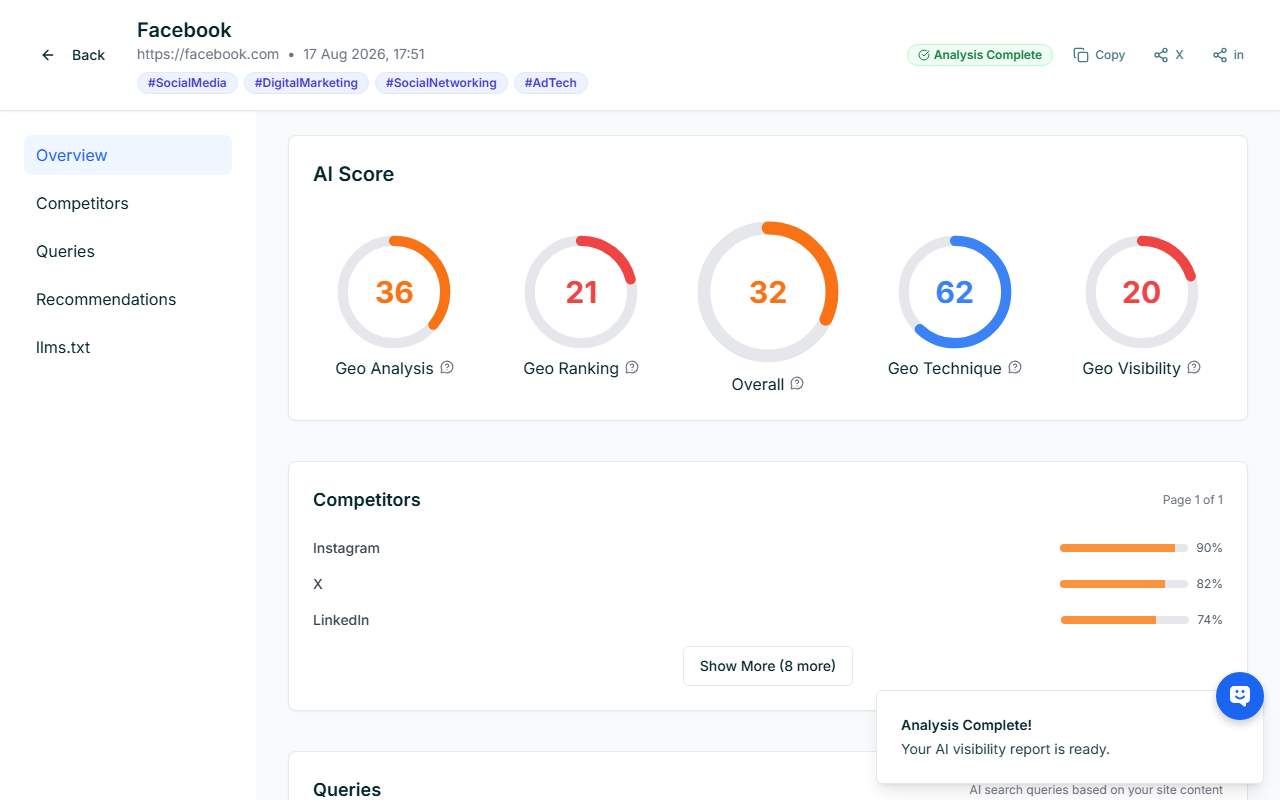
Figure 2: Comprehensive GEO score analysis breakdown and competitor mention rates.
To ensure your brand appears in LLM responses, your content must possess three critical attributes:
- Clear Entity Disambiguation: AI models must easily connect your brand name to your core industry (e.g., "GeoCheck.ai = Generative Engine Optimization Tool").
- Authoritative Citation Consensus: Multiple independent sources (blogs, news, forum discussions, review aggregators) must consistently reference your product.
- Structured Machine-Readable Formats: Implementing clean
JSON-LDschema and standardllms.txtfiles allows RAG crawlers to parse your offering without hallucination.
4. How to Measure Your GEO Visibility Score
You can't improve what you don't measure. Calculating your GEO Visibility Score involves querying multiple AI models across representative industry search prompts and measuring your brand mention rate.
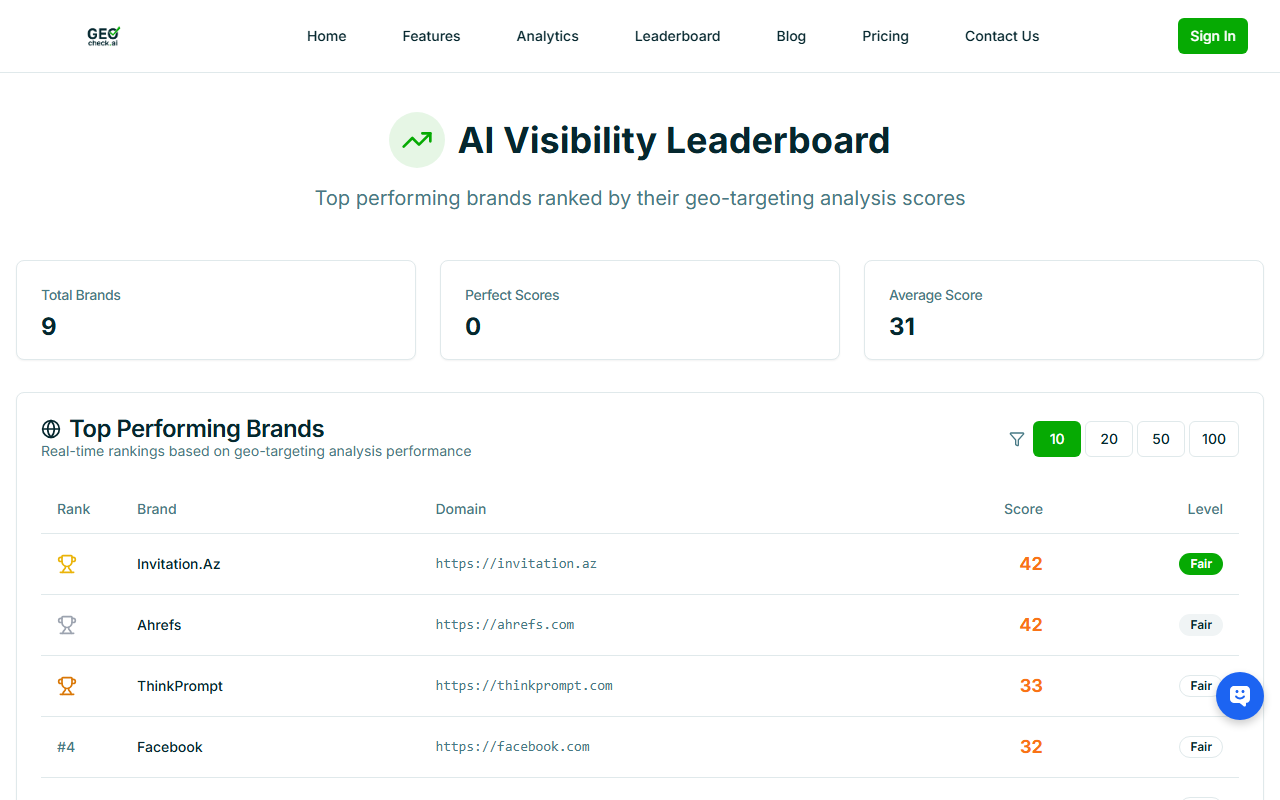
Figure 3: Industry leaderboard tracking top brand rankings across ChatGPT, Gemini, and Claude.
A high GEO Score (80–100) indicates that your brand is a market leader recommended across almost all AI engines, whereas a low score (<40) signals that AI models are actively recommending your competitors instead.
5. 4 Actionable GEO Strategies to Implement Today
Step 1: Implement llms.txt Standard
Just as robots.txt guides search engine crawlers, llms.txt provides LLM web scrapers with an explicit, markdown-formatted summary of your site's core offerings and documentation.
Step 2: Use Direct Fact-Density Writing
AI models favor concise, fact-dense statements over fluff. Include hard metrics, feature comparison tables, and direct definitions in your content.
Step 3: Optimize Multi-Language Entity Knowledge
AI search queries are increasingly global. Publishing localized content across multiple languages (English, Japanese, Spanish, German, Vietnamese) establishes entity authority across regional LLM instances.
Step 4: Run Continuous Multi-LLM Audits
Keep track of how AI perception evolves. Automated platforms like GeoCheck.ai allow you to audit ChatGPT, Gemini, Claude, Grok, and DeepSeek in parallel with a single click.
Conclusion
Generative Engine Optimization is no longer optional—it is the new battleground for digital marketing. By understanding how LLMs process authority and structuring your brand content for AI synthesis, you can secure your position as the top recommendation in the AI era.
Ready to check your brand's AI visibility score? Run a free GEO audit on GeoCheck.ai today.