What is Generative Engine Optimization (GEO)? The Complete Guide to Winning AI Visibility
The digital marketing landscape is undergoing its most profound transformation since the birth of search engines. For over two decades, Search Engine Optimization (SEO) was the undisputed king of digital visibility. Websites fought fiercely for the coveted blue links on Google and Bing. Today, however, user behavior has shifted. Instead of querying a search bar and clicking through multiple links, millions of users now turn to AI answer engines like ChatGPT, Google Gemini, Claude, Grok, and DeepSeek to get direct, synthesized answers.
If your brand isn't being cited, recommended, or referenced inside these conversational AI responses, you are virtually invisible to a massive and rapidly growing segment of your target audience.
Enter Generative Engine Optimization (GEO).
In this comprehensive guide, we will unpack what Generative Engine Optimization is, how it differs from traditional SEO, why it matters for modern brands, and how you can master it using advanced platforms like GeoCheck.ai.
Understanding the Shift: From Blue Links to AI Answers
To understand Generative Engine Optimization, you first need to understand how AI-powered search works. Traditional search engines crawl the web, index pages, and rank them based on keywords, backlinks, and technical signals. Generative engines—powered by Large Language Models (LLMs)—do something entirely different. They retrieve information, synthesize it, and generate a bespoke, conversational response tailored to the user's intent.
When a user asks ChatGPT, "What is the best enterprise project management software for remote teams?" the AI doesn't just output a list of ten URLs. It evaluates the web's consensus, weighs brand authority, and writes a narrative recommendation.
User Query ➔ AI Generative Engine ➔ Retrieval & Synthesis ➔ Contextual Narrative (Your Brand Cited? Yes/No)
Generative Engine Optimization (GEO) is the strategic practice of optimizing your digital footprint so that AI engines understand, trust, and prominently feature your brand, products, and content within their generated answers.
GEO vs. SEO: What's the Difference?
While GEO borrows foundational principles from traditional SEO—such as creating authoritative content and establishing digital trust—the metrics, mechanics, and goals are fundamentally distinct.
To succeed in the era of Answer Engine Optimization (AEO) and GEO, marketers must adapt their strategies. The table below outlines the core differences between traditional SEO and Generative Engine Optimization:
| Feature | Traditional SEO | Generative Engine Optimization (GEO) |
|---|---|---|
| Primary Goal | Rank on Page 1 / Top 3 blue links | Be cited/recommended in AI-generated answers |
| Key Performance Indicator (KPI) | Organic traffic, Click-Through Rate (CTR) | AI Share of Voice, brand mention frequency, sentiment |
| Target Platforms | Google, Bing, Yahoo | ChatGPT, Gemini, Claude, Grok, DeepSeek |
| Content Format | Keyword-targeted web pages, meta tags | Context-rich summaries, statistics, direct quotes, entity authority |
| Measurement Toolset | Google Search Console, Ahrefs, SEMrush | GeoCheck.ai (AI visibility and sentiment auditing) |
As the data shows, traditional tools cannot measure how an AI model perceives your brand. This is why modern marketing stacks require specialized GEO platforms.
Why Generative Engine Optimization Matters Right Now
The transition from deterministic search engines to probabilistic AI engines is happening at breakneck speed. Industry statistics reveal a staggering trend:
- Over 40% of younger demographics now prefer using AI assistants over traditional search engines for initial product research.
- Zero-click searches continue to rise, as AI engines satisfy user intent directly on the results page.
- Brand perception is increasingly shaped by what AI models say about you. If ChatGPT claims your competitor has superior customer service, potential buyers rarely dig deeper to verify otherwise.
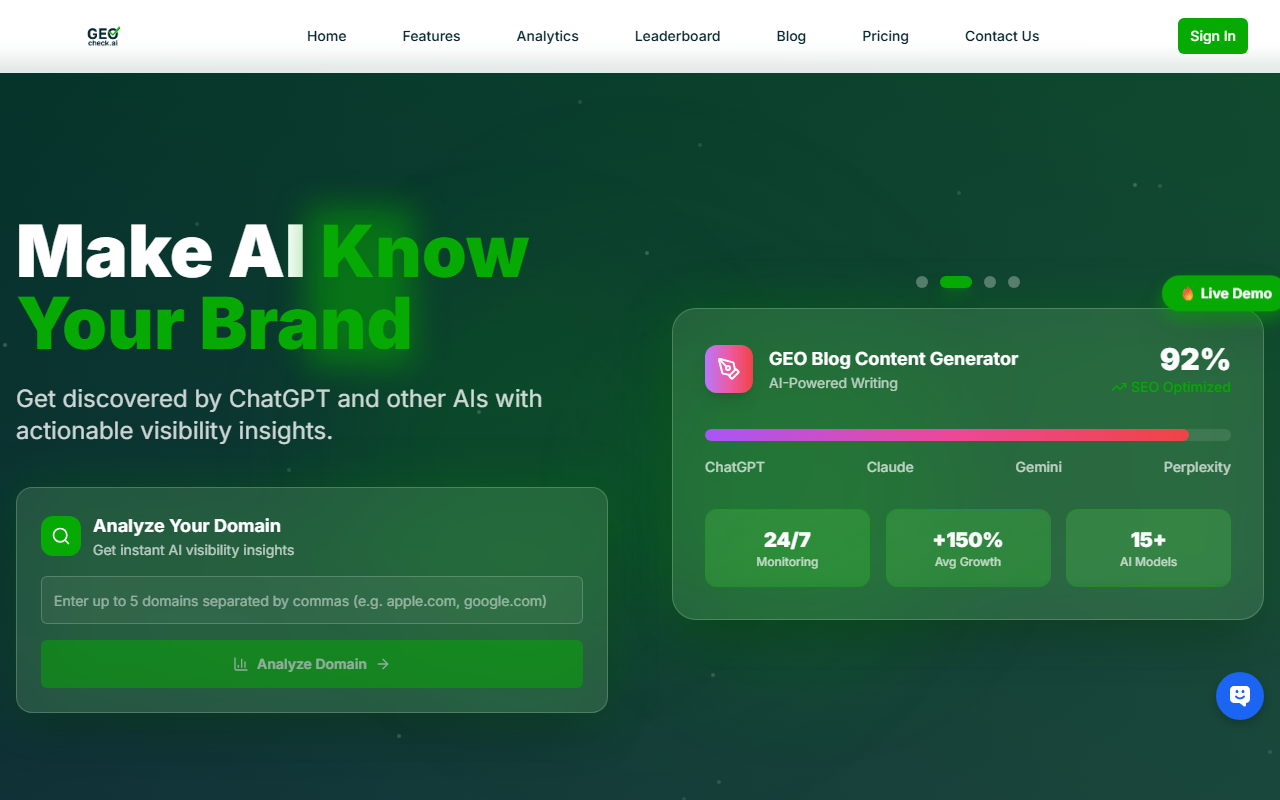
Failing to optimize for generative engines means abandoning the top of the conversational funnel. To capture modern buyers, you must ensure that your brand entities are deeply embedded in the training data and real-time retrieval indexes of models like Claude and Gemini.
Core Pillars of a Winning GEO Strategy
Executing a successful Generative Engine Optimization campaign requires a shift in tactics. Here are the four core pillars every brand must implement:
1. Entity Optimization and Knowledge Graph Presence
AI models think in entities (people, places, concepts, and brands) rather than isolated keywords. You must ensure your brand is clearly defined across structured data, Wikipedia, Wikidata, and industry-specific directories. If an AI engine cannot clearly map your entity relationships, it will overlook you in favor of better-structured competitors.
2. Quotability and Statistical Density
LLMs love citing hard data, expert quotes, and definitive statistics. Research shows that content incorporating credible statistics, expert attributions, and clear, authoritative phrasing is cited by generative engines at a significantly higher rate. Stop writing generic fluff; publish original research and data-backed insights.
3. Multi-Model Visibility Auditing
Unlike Google, which has a near-monopoly on traditional search, the AI ecosystem is fragmented. Users query OpenAI’s ChatGPT, Google’s Gemini, Anthropic’s Claude, xAI’s Grok, and open-source models via DeepSeek. A strategy that works for ChatGPT might fail on Claude. Continuous monitoring across all major LLMs is non-negotiable.
4. Sentiment and Narrative Control
It is not enough to simply be mentioned by an AI; the context matters immensely. Are you recommended as a budget alternative, or as the undisputed enterprise market leader? GEO involves tracking and improving the narrative sentiment surrounding your brand in AI outputs.
How to Audit and Scale Your GEO with GeoCheck.ai
Navigating the murky waters of AI visibility can feel like shooting in the dark. Without automated tooling, marketing teams waste countless hours manually prompting ChatGPT, Gemini, and Claude to see if their brand appears.
This is where GeoCheck.ai becomes your ultimate competitive advantage.
GeoCheck.ai is the industry-leading platform designed specifically to audit, track, and optimize AI visibility. With GeoCheck, you can:
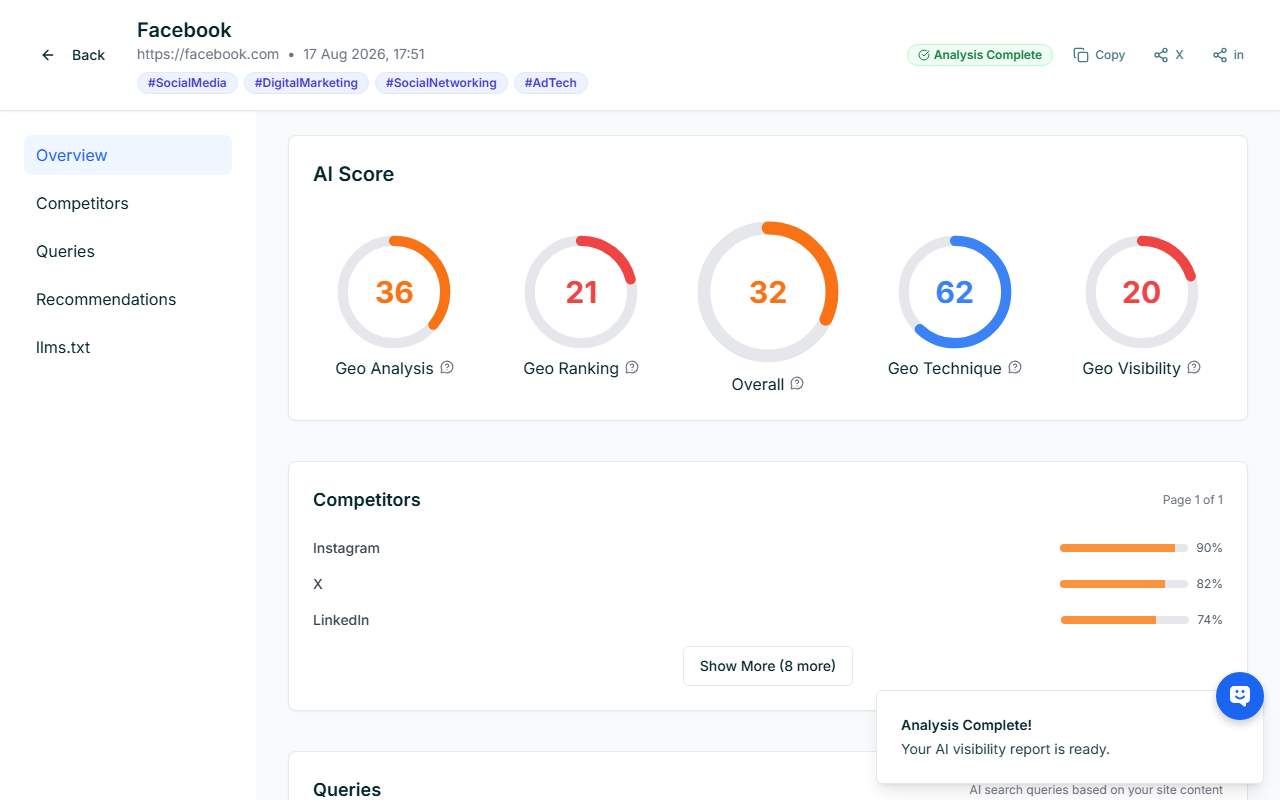
- Monitor AI Share of Voice: Instantly see how often your brand—and your competitors' brands—are recommended across ChatGPT, Gemini, Claude, Grok, and DeepSeek.
- Run Deep-Dive GEO Audits: Utilize advanced diagnostic tools to analyze why certain content pieces get cited by LLMs while others are ignored.
- Track Sentiment Analysis: Measure whether AI engines speak positively, neutrally, or negatively about your product offerings.
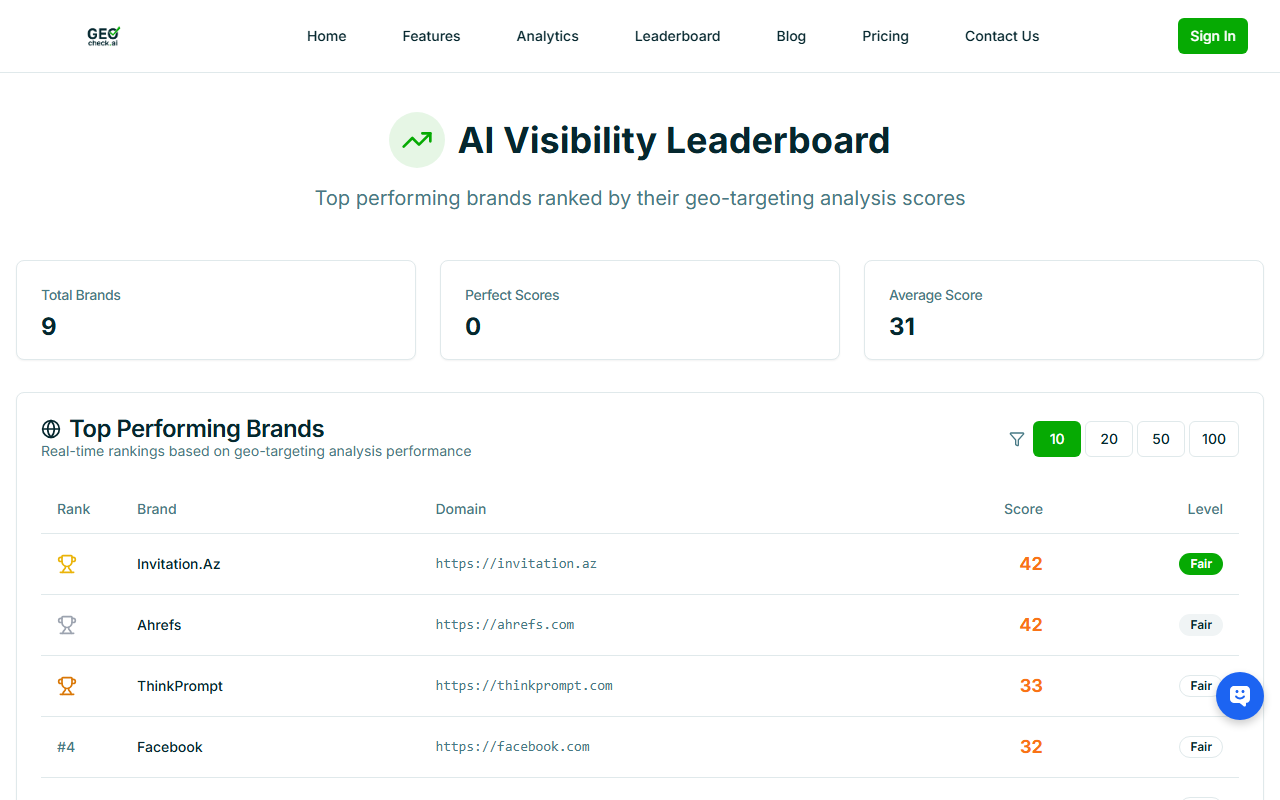
By leveraging GeoCheck.ai, you can transition from reactive guessing to a proactive, data-driven Generative Engine Optimization strategy.
Conclusion: Take Control of Your AI Future
The rules of digital discovery have been rewritten. Traditional SEO alone is no longer enough to secure your brand's future pipeline. As consumers increasingly delegate their research and decision-making to generative AI, mastering Generative Engine Optimization (GEO) is essential for survival and growth.
By structuring your entities, boosting your content's quotability, and continuously tracking your performance across all major LLMs, you can position your brand as the definitive recommendation in your industry.
Ready to see where your brand stands in the age of AI? Audit your AI visibility today with GeoCheck.ai and take the first step toward dominating the future of search.